North Nicaragua
While southern Nicaragua is known for its high concentration of spitting, sand-bottom tubes, the north is more spread out. There’s variety, too — pointbreaks, reefbreaks, rivermouths, beginner waves, experts-only spots, etc. But like the south, the real draw here is the beachbreak barrels — board-snapping, bone-crunching beachbreak barrels — particularly at the northern tube factory appropriately named “The Boom.”
The Waves

Miramar
The Miramar area offers a variety of waves - pointbreaks, reefbreaks, jetty breaks, and beachbreaks - but its the left point break reef that is actually called Miramar. The best swells for Miramar are from the SW to S, ideally SW. The point favors mid to long-period, single swells, whereas the other beachbreaks around it favor combo swells and a mix of swell periods for peakier shape. Around Miramar itself, there are several spots within walking distance:1. Miramar Point is a reef pointbreak left that holds the most swell in the area. It has three main takeoff spots -- two on the outside during bigger swells, offering either a short, steep right or a long left that breaks all the way through to the inside. The outside works at low tide and can hold sizeable swells. When the swell is smaller and during higher tides, the inside and third takeoff zone can get pretty good. This inside section -- best between waist to head-high -- is a fast, reefy left that goes into shallow rocks;2. Pipes is just up the beach from Miramar Point, a beachbreak section with rights and a peeling left that breaks over a reef. Pipes can get very hollow and fast, especially the rights that wedge up from the reef takeoff zone and break toward the sand-bottom section. Pipes works best on a falling mid-tide and an incoming low tide; 3. The Breakwater is a break (fairly new) just north of Pipes due to the construction of a big/long breakwater. Due to reflection off the breakwater, there are fun wedging peak in this zone with rights and lefts to pick off. 4. Shacks is a very fast, well-shaped left that breaks over sharp reef and can get very hollow. It works best on mid-going-high tide. This wave does not work well with a low tide, as it tends to section out and get very shallow over sharp reef. This is the most difficult wave to surf in the area when it's pumping, and the most rewarding.5. Shifty's is about 100 yards of beachbreak just on the south side of the reef at Shacks that favors the mid-to-high tides and consists of shifty peaks and bowls, hence the name. Fun but fairly quick rights and lefts offer a variety of barrels, lips and ramps. Just outside of Shifty's is a reef that helps break up the incoming swell lines and form the peaky surf. Sometimes this outside reef will offer a decent left and right on bigger swells and lower tides, but it is usually fat and slopey.

Puerto Sandino
Puerto Sandino is one of the, if not the longest wave in Nicaragua. However, it can sometimes be difficult to catch it good, as it is way out in the middle of open water and very exposed to the wind from any direction. The initial takeoff zone to the end of the wave usually averages over 300 yards when it's on. It is mostly a sand-bottom break, however, there are rock/reef sections at certain points along this long wave. These intermittent areas of sand and reef allow for a variety of barrel and wally sections throughout the length of the ride. Boat access is highly recommended, as the wave starts in front of a large rivermouth almost a half-mile from the shore, currents can be strong, and having help if someone gets hurt. Due to Puerto Sandino's location, it picks up more swell than the nearby breaks, often producing sets that are several feet bigger. Its magic size is around eight-ten feet on the face. Although, due to the consistency of the sandbars, it can hold more size with the right swell direction and winds. The best time to surf this wave is the incoming tide push and with calm or light offshore winds. The ideal swell direction for Puerto Sandino is SSW, but does fine with S or SW too. Located due west from the very top end of Lake Nicaragua, the Puerto Sandino area still enjoys the benefits of the lake effect offshores that Nicaragua is known for. Peak season is from April through September.

El Transito
The crescent-shaped cove provides a beautiful backdrop to a lineup that offers multiple peaks that tend to bounce off of a few rocks scattered just outside the takeoff zone. Although the best, biggest and most common swells are from the SW or SSW, Transito can also handle the occasional WNW swell during winter (as long as it's under 290 degrees). The best periods are anything from 16 seconds or under. Over 16 seconds and it tends to shut down, since the beach is fairly small. The extremely consistent El Transito break can be good all year round, just as long as it stays under a couple feet overhead. This spot is usually pretty fun in the offseason (November to March), as the swells are usually smaller during that time of year and more suitable for the break. There is a small point on the south end of the beach (similar to Machete Point at Playa Maderas) with a rock/sand bottom that works on mid-period SSW swells. The wave on the main beach (sand bottom) is typically mellow, with softer barrel sections and medium-length waves suitable for all levels of surfers. El Transito is best from waist-high to about one-foot overhead and on a mid-tide, however, it will break on most tides. The tide swings here are drastic, so the peaks will often change completely. The predominant offshore winds (250+ days/year) are best from the E-NE. These offshores rarely get too strong here as it's further north (so hardly ever any upwelling). There are other breaks within walking distance or a short boat ride. Hemmies (if you dare) is a 15-minute boat ride to the south. About a 30-minute boat trip to the north, there is the increasingly popular break of Puerto Sandino, which is one of the longer lefts in Nicaragua, offering about 300-yard rides on the best days. There are other gems within walking distance, like a barreling righthand wedge that rarely goes flat, and a little-known big wave slab that shows up on the larger, longer-period swells.


The Occidente is a very special place. I love it and am always ready to make the drive. It has more space, emptier lineups, and a very different vibe in an out of the ocean.

When to Score & Seasonal Surf Data
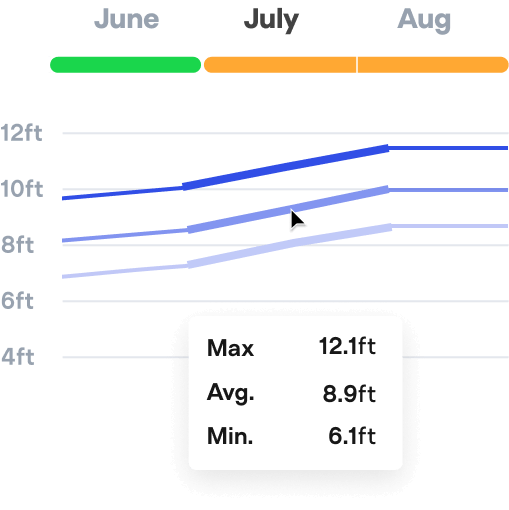
Know exactly when to score — powered by our expert historical forecast data.
Decades of spot-specific swell info — combined with forecaster insights — show your best chance to score, found only on Surfline.
Time to score

Forecaster reports
Seasonal Surf Data

North Nicaragua According To...
Manny
Resano
A big-wave charger with 20 years of Nicaragua living under his belt, Manny Resano breaks down Nicaragua’s opportunity-rich northern region.
What makes Northern Nicaragua a special destination for surfers?
Northern Nicaragua can also be called “Occidente,” which means The West, even though the majority of the people divide it in north, south and central. Nicaragua faces southwest, so the more northern you travel the further west you travel. The Occidente its very special, I love it and am always ready to make the drive. It has more space, emptier lineups and a very different vibe in an out of the ocean. There are all kinds of waves, but the area is most famous for beachbreaks and rivermouths, but there are other possibilities as well.
What’s the vibe?
The vibe is a lot mellower in this part of Nicaragua even though local surfers shred. I guess there is more space, less visitors and more beachbreaks, so less pressure. There are different kinds of beachbreaks depending on what you are looking for.
What should surfers bring?
I would definitely bring a good quiver as some of the waves are very hollow. You’ll mostly need your shortboard and a step-up that’s a couple inches bigger. Also, I always travel with my coffee machine to hit the water early, first light.
When is the best time to score?
The South Hemisphere never really fully stops. It’s less consistent, but you still get swells in the offseason. The best season is March to October and the offseason from November to February. During the offseason Northern Nicaragua, in my opinion, has more swell, better conditions and warmer water temperatures.
What else is there to do when you’re not surfing?
There are pretty colonial towns, amazing volcanos, lakes and many miles of isolated nature and country. There is a lot to see, but you have to be creative, you might not find it in a brochure. There is good fishing, diving, horseback riding, all without the hassle of permits and rules.
What’s your favorite local cuisine?
Nicaraguan cuisine is amazing, but not promoted or marketed. Soups, fresh fish, pork, steak, chicken. Lots of vegetables and fruits. A lot of not very healthy but tasty fried food as well.
Where can people learn to surf? Any surf schools you’d recommend?
The original camp up there is Chancletas.
What are some things people should be aware of when it comes to local culture and customs?
I would advise visitors and people moving to Nicaragua to try not to teach or school the locals. They have been living in these lands for hundreds of years and know exactly how to do it. 2022 will be my 20th year in Nica and I keep learning from the locals, every year I understand more. Nicaraguans are super smart and have a great sense of humor. Most of them are a bit reserved with visitors, but overall I believe they are the friendliest you can find in a trip. It surprises me every time.
What’s the number one thing folks should keep in mind when travelling through the area?
A good recommendation would be to be extremely careful with weed, you can get the full force of the law for one joint and you can’t pay your way out. Nicaragua also punishes very hard under-age prostitution, which is great. When it comes to driving and traffic tickets, policemen are usually super friendly, so don’t be scared.
Any other local tips?
Most of the travelers nowadays are less experienced in surfing. It is important to understand that the ocean belongs to everybody and that means that I cannot do whatever I want and be reckless or unsafe to other surfers. It is not cool to ruin other people’s rides either. Try to find the best wave for your level. If you enjoy party waves, there is probably a place where you can do it.
Travel Essentials

Culture & customs
From the bloody Spanish colonial era to a devastating earthquake in 1972 that destroyed most of Managua’s infrastructure to the Nicaraguan Revolution that ended in 1990, the people of Nicaragua have endured millennia of adversity. Nevertheless, they still radiate laid-back hospitality. With tourism being a main driver of the Nicaraguan economy (especially eco-tourism, the place is teeming with natural-world wonder), Nicas are generally very welcoming to outsiders.
Local scene
Compared to the south, Nicaragua’s northern Pacific coast is somewhat sleepier when it comes to tourism infrastructure. But there’s still a handful of surf camps and hotels to stay at around the marquee spots, so expect to see locals and visiting surfers alike sharing the lineups. And nearby León – a humming city with colonial roots – is a well-traveled destination for visitors looking for nightlife, culture and history.
What to bring
If you’re going to Nicaragua to surf, you’re probably looking to get tubed over sand, so pack your boardbag accordingly; specifically, something you can maneuver quickly from the takeoff, position yourself under the lip, and thread your way through the green room. And pack some back-ups, because you’ll probably break at least one board. You can get away with low-performance crafts like fishes, mid-lengths and longboards on the smaller days. But a svelte, maneuverable shortboard is the primary weapon of choice when it’s on.
Also: Our amazing partners over at FCS have curated a collection of fine products for your next surf trip. Check it here.
How to get there
From Managua it’s about an hour-and-a-half drive to Miramar. Some folks take connecting flights through Costa Rica or even drive across the border, but however you get here, most surf resorts will have a driver on hand. And there’s always the option to rent your own (4WD) vehicle.
Downtime
Colloquially, Nicaragua is known as the “Land of Lakes and Volcanoes,” so naturally, this is a place for outdoor enthusiasts. In the northern region, activities include jungle adventures, volcano tours, lake excursions, ocean fishing and, for the bold and the brave, volcano surfing. About an hour outside of the bustling city of León — which is a good place for urban entertainment like nightlife, dining, dancing and shopping — lies the Cerro Negro, the youngest active volcano in Central America that last erupted in 1999 and is still monitored regularly. With slopes of black ash along its banks, people have taken to riding down the banks on finless surfboards, snowboards, four-wheeled wagons and even planks of wood. Guided tours are recommended, providing proper protective gear like goggles and volcano-specific surfboards — which apparently are an actual thing.
Quick Tips
Travel Time
LAX: 5.5 hrs
JFK: 4.5 hrs
Heathrow: 11 hrs
SYD: 30 hrs +
Connectivity
Not the best WiFi or cell service in general, but likely okay at your accommodations.
Currency
Nicaragua Córdoba. At the time of writing, $1 USD = 35.77 NIO
Avg. cost of...
Cup of coffee: $2.00
Lunch: $12.00
Beer: $2.50
Hotel room: $200
Visa Requirements
No travel visa necessary for US visitors coming for a short stay.
Drinking water quality
You probably want to stick to bottled.
Hazards
Broken boards, bones, and egos. Driving the sketchy roads in a vehicle without 4WD. Not much air wind, since it’s always offshore.
Cash, card, crypto
Best to have cash, especially in more rural areas. Some, but not all places, will accept credit or debit. ATMs are available for withdrawals in most urban centers.
Explore Other Zones


Have feedback on this zone? Let us know [email protected]
Questions about booking with Surfline Travel? Check out our FAQs