Santa Cruz
The waves around Santa Cruz are punchy, cold, and often crowded, but the coastline offers variety, from points, reefs, and beachbreaks to suit nearly any style. Santa Cruz itself is a mix of college town, surf town, and counterculture hub. Bundle up in the right rubber, respect the locals, and you’ll find a surf community that’s as storied as anywhere in California.
The Waves

Waddell Creek
Waddell Creek is several hundred yards of reefs and beachbreaks leading up to a rivermouth, then more beachbreaks with more reefs at the north end. Waddell Creek is the workhorse spot for Santa Cruz surfers. It tends to be best in the morning before the onshore winds come up, and it can be good all day when the winds are blowing offshore. When the wind comes up, the sailboarders take over, but when it's not windy enough for them, the kitesurfers are out there. Waddell Creek is open to everything and does a good job of handling it all. The reefs love a mid-size W or S swell, and the beachbreaks like anything up to double-overhead, from any direction. There's nothing faux about Waddell Creek. This is an industrial-strength surf spot, which also happens to be at the mouth of one of the prettiest valleys on the coast. Catch it on a blue, offshore, head-high day in the fall, and welcome to NorCal heaven.

Scott's Creek
Scott's Creek is a right reef that breaks anywhere from two-feet to 20, mostly in the winter. It can get big and burly, and the place will roll you to within an inch of your life if you screw up. The reef on the north end of the beach is the main attraction, but during the winter, the creek and the moving sand can create sandbars all up and down the beach. Scott's Creek also gets a lot of wind, so if you see sails, you probably won't be surfing.


Natural Bridges
The first surf spot in Santa Cruz proper, Natural Bridges is a right reef/point that breaks along a gnarly rock shelf. It's a winter spot, best on bigger swells and lower tides. Natural Bridges can be mind-boggling at times, kind of like Gas Chambers in Puerto Rico on the wrong tides, but it is a little north of Steamer Lane, so it is exposed to NW winds and blows out easily.


Cowells
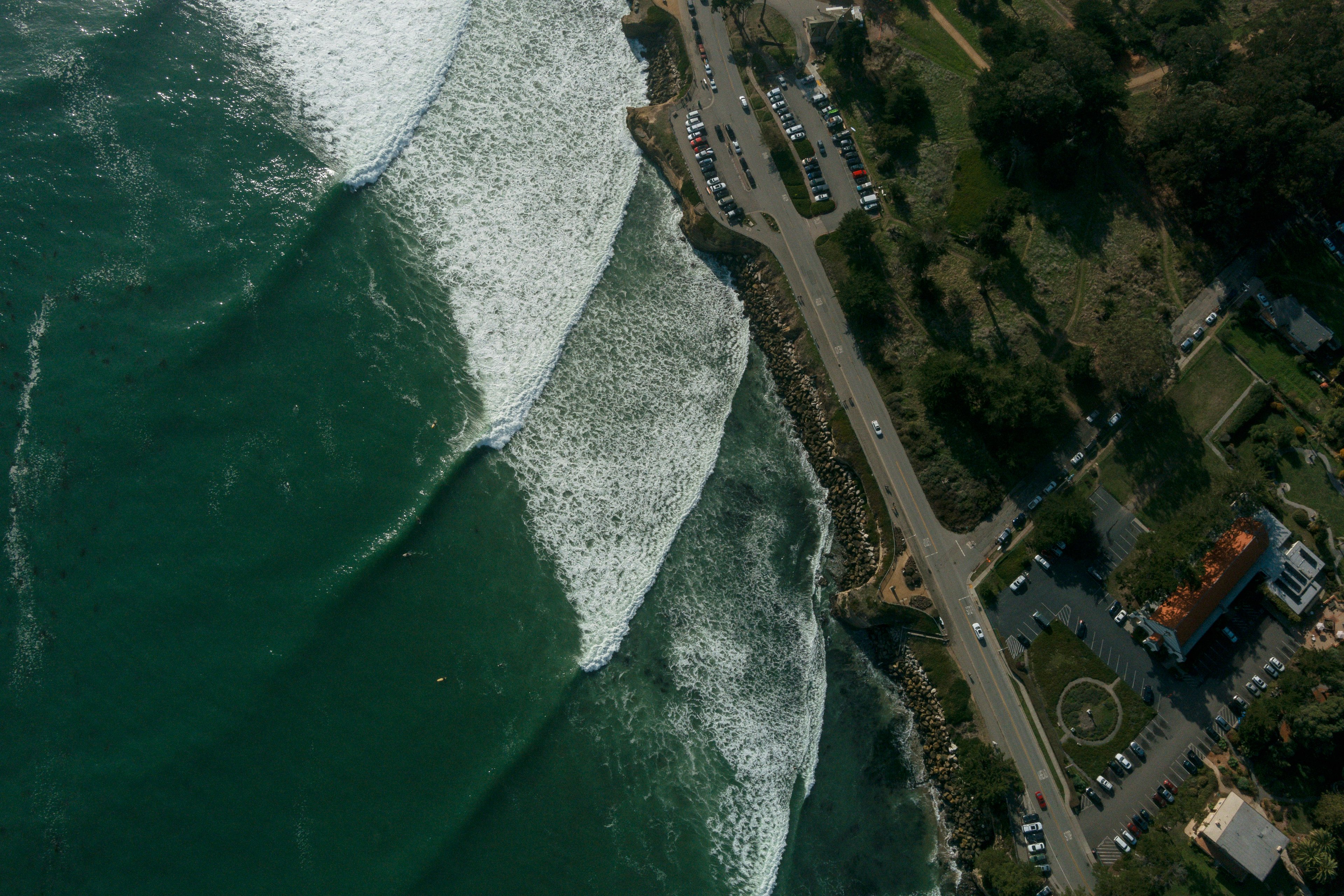
Cowell's Beach is one of the best places in the world to learn how to surf. All the energy pulsing around Lighthouse Point mellows out by the time it gets to Cowell's, and the result is a long, gentle, easy wave that breaks for a very long time. Cowell's is one of the most crowded surf spots in Santa Cruz, but as most of the surfers are beginners, there is little animosity. Most of the people at Cowell's are there to learn and have fun and have a good time. Mixed in with all the learners and Banana Slugs and other flotsam and jetsam is a cadre of red-hot longboarders who can score major tip time from the staircase all the way to the beach.
Pleasure Point
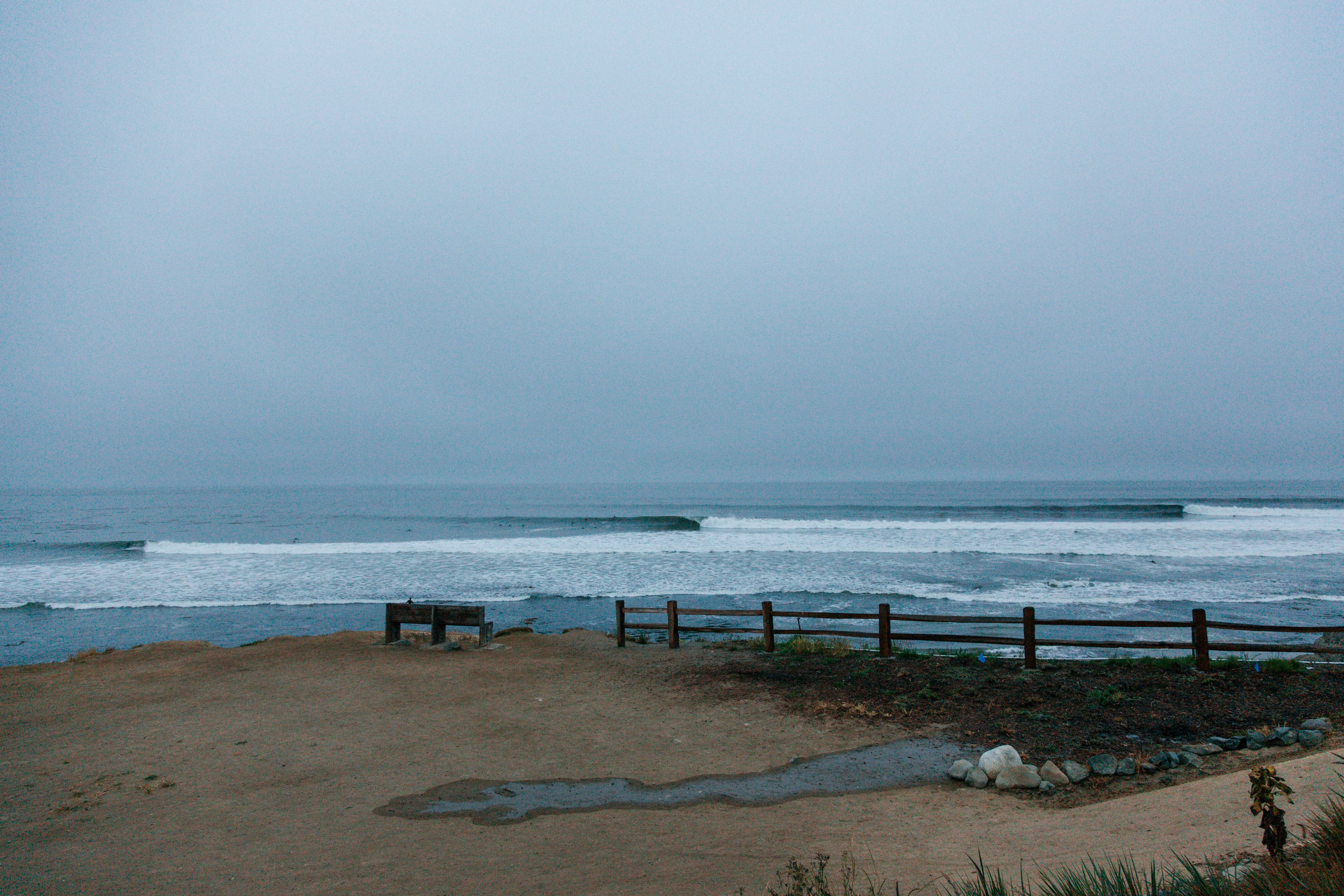
This is the East Side of Santa Cruz. Once the shy little sister to the West Side, Pleasure Point is now producing its fair share of world-class surfers. Jay Moriarity, may he rest in peace, used to live at Pleasure Point, Chris Gallagher at 41st Avenue.Pleasure Point offers something for every possible kind of waverider, from bodyboarders to shortboarders to longboarders, and this place is very, very popular with all of that and everything between.
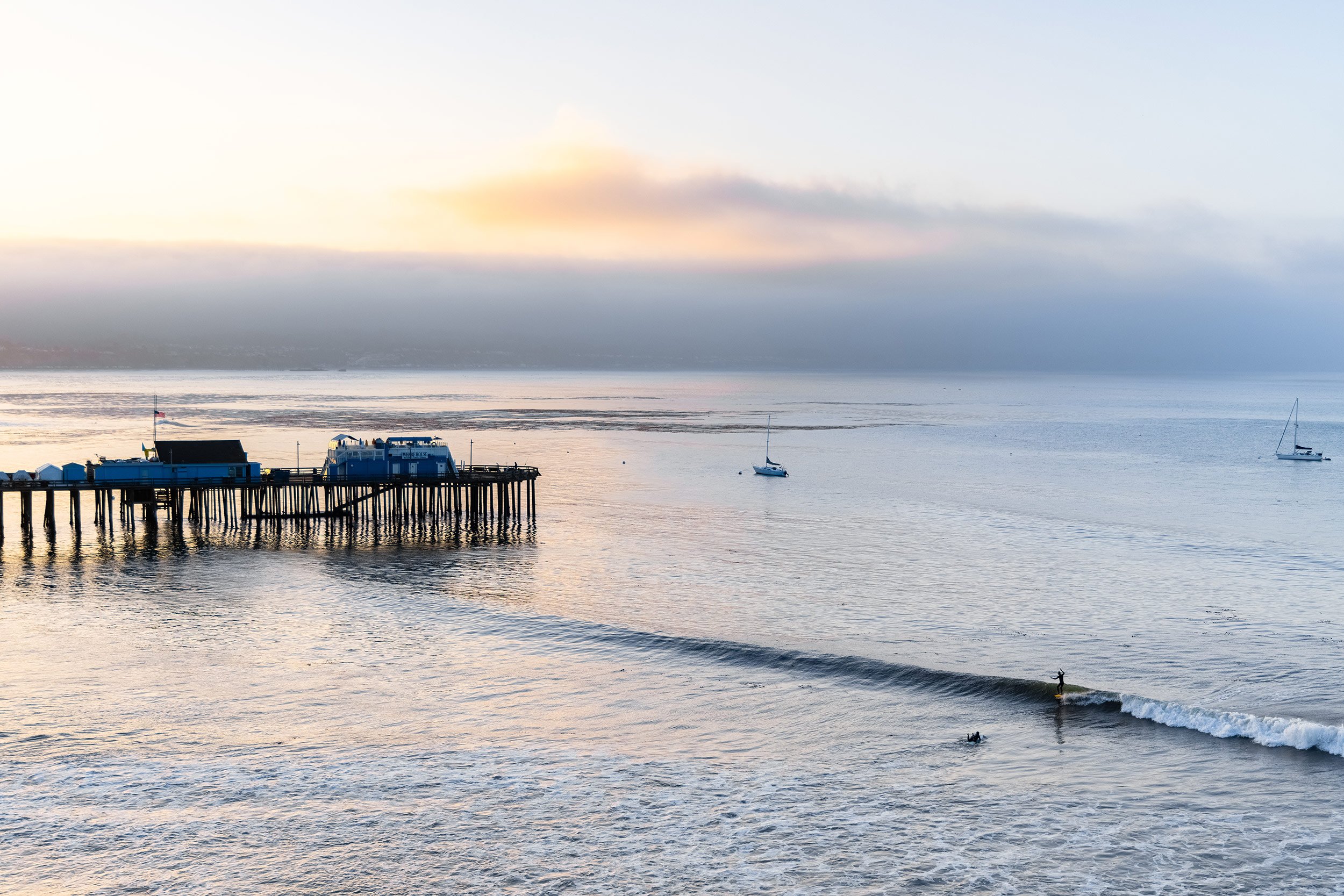

“Within a small stretch, you have a world-class beginning wave all the way up to a training ground for riding 30 or 40-foot surf, and it’s all within a quarter of a mile.”
When to Score & Seasonal Surf Data
Know exactly when to score — powered by our expert historical forecast data.
Decades of spot-specific swell info — combined with forecaster insights — show your best chance to score, found only on Surfline.
Time to score

Forecaster reports
Seasonal Surf Data

Santa Cruz, According to...
Peter
Mel
Longtime local, surf shop owner, big-wave charger on Surf City North
What makes Santa Cruz a special destination for surfers?
The variety of surf we have. Anywhere from world-class beginner breaks at Capitola and Pleasure Point, or Cowell’s — those are world-class spots to learn how to surf. And then all the way up to within an hour’s drive, you’ve got world-class big waves. So, the most advanced stuff you can get, and everything in between. Variety is key to Santa Cruz.
What kind of waves can visiting surfers expect?
Generally, we have a lot of right-hand pointbreaks. There’s not as many lefts in this part of the world, so it’s probably not as great for goofyfooters unless you want to work on your backhand. Steamer Lane is a perfect example of the variety because the very inside of Steamer Lane is Cowell’s, which is the right next to the base of the pier, and then that point goes all the way out to some of the biggest waves in Santa Cruz at Steamer Lane. We’ve also got some really hollow beach breaks, slabbing reefs, and long right-hand pointbreaks. The protection of where we’re located, too, is a big key to our success. We’re in a little bubble of weather because we’re on the north end of a bay, we’re protected from the outside winds.
What’s the vibe?
There is a hierarchy, which has been established through legendary surfers, teaching generation to generation to respect your elders and all that stuff. So, that’s something that’s kind of instilled in surfing globally, but it is held here in high regard, so we follow those rules. But overall, the vibe is good, especially the tolerance of new people, if you’re surfing in the regions that are kind of designated that way. Capitola is a prime example of a very beautiful surfing community that has an established local group that’s there, but they also embrace the newcomer.
What should surfers bring?
I’d say any board can be used that creates smiles. There’s just so much variety in waves, that you can get away with anything. There are places you can go down to use a foil and get away from a crowd, to a longboard, to a softboard, to a skimboard…any kind of board you normally ride, you can ride here. Then you’re in a hooded 4/3 with booties most the year; a 5/4/3 in winter.
When is the best time to score?
Fall. The weather’s good, water’s warmer, and we start to see those first Northwest swells and they come from a little more westerly direction. So yeah, September through December is the best.
What else is there to do when you’re not surfing?
We’re a tourist destination, so there’s plenty of nightlife, music, pubs, bars, breweries. We’re a college town, too, so it’s pretty hyped up, but we’re always within ocean distance, and you can go into complete solitude and do a walk through the redwoods within ten minutes. There’s world-class mountain biking, there’s world-class golf. There’s pathways for walking along West Cliff and East Cliff. Biking across town is easy. There’s the boardwalk and you could ride a rollercoaster. There’s lots to do.
What’s your favorite local food?
Cafe Cruz is my favorite.
Where would someone go to learn how to surf?
Capitola on the East Side and then on the West Side there’s Cowell’s. Both are in areas that are very, very tolerant to people trying to learn how to surf.
What should visitors know about the local culture?
I think one thing that pops up is sharks and wildlife. But there’s areas that you can surf in Santa Cruz that are protected by kelp and shallower water that isn’t going to have that vibe. There’s such a stark contrast because you can go up the coast and you’re surfing by yourself and you’re sitting in the elements… If you’re freaked out by sharks you can hang out in areas that aren’t going to be unsafe, and then if you’re into an adventure, that’s here, too.
Travel Essentials
Culture and Customs
Santa Cruz holds a unique place in American surf history as the site of the first documented surfing on the mainland, when three Hawaiian princes, David Kawānanakoa, Jonah Kūhiō Kalanianaʻole and Edward Keliʻiahonui, crafted redwood boards in 1885 and rode waves at the San Lorenzo rivermouth. That legacy carried forward, with Jack O’Neill pioneering the wetsuit here in the 1950s helping to make coldwater surfing not just possible, but thriving. By the 1960s, the Santa Cruz Surfing Club and local shapers like Bob Pearson and John Mel were pushing the town onto the global stage, while the waves at Steamer Lane became a proving ground for California’s best. Innovation didn’t stop at boards and suits — even Doc Scott’s invention of the surfer’s earplug came out of this scene. The 90s saw Josh Pomer’s “The Kill” series, spotlighting the area’s talent like Peter Mel, Flea Virotsko, Jason “Ratboy” Collins and Shawn “Barney” Barron give Taylor Steele’s boys a run for their money. Today, Santa Cruz blends deep tradition with modern talent, its culture rooted in both heritage and the consistency of the waves that keep surfers coming back in droves.
Local Scene
Santa Cruz’s local scene is equal parts hometown pride and modern intensity. Most of the great surfers from Santa Cruz never leave -- because, why would you? Steamer Lane can feel like an amphitheater, with crowds both in the water and on the cliffs watching, and the lineup is often packed with seasoned locals, groms, and pros all vying for waves. Pleasure Point offers a friendlier, longboard-heavy vibe, but everywhere in town, etiquette matters. Winter swells bring out heavy hitters, while summer still finds plenty of mellow rollers for beginners and cruisers. Despite the crowds, there’s a strong sense of community, with generations of families tied to the same breaks, making Santa Cruz feel both fiercely local and undeniably welcoming if you respect the rules of the lineup.
What to bring
Depending on your skill level, you could ride anything from a big-wave gun, down to a 10’ log for longboarding Pleasure Pt. Since there’s a kind of wave for anyone, it’s up to you. Rubber-wise, a 4/3mm w/ boots will get you through summer, while a hooded 5/4/3 with boots (gloves if you need) are what you’ll need for winter.
How to get there
Fly into San Francisco (SFO), or maybe San Jose depending where you’re coming from, rent a car, and drive the coast down.
Downtime
Part surf town, part college town, part tourist hub, the energy shifts depending on where you land. Downtown is packed with breweries, pubs, and live music, while the famous Boardwalk keeps the classic beachside carnival vibe alive with rides, arcades, and even a rollercoaster. Yet within minutes, you can trade the bustle for total solitude with a walk through the redwoods, or head out for world-class mountain biking, golf, or mellow paths along West Cliff Drive. With everything so close to the ocean, it’s the rare place where you can balance nightlife, nature, and surf in a single day.
Quick Tips
Travel Time
JFK: 7 hours
Heathrow: 14 hours
Sydney: 14 hours
Connectivity
Everywhere.
Currency
USD.
Avg. cost of...
Coffee: $5.00
Lunch: $20.00
Beer: $8.00
Hotel room: $200
Visa Requirements
Yes. Depends where you're coming from. Check with your local consulate.
Drinking water quality
Clean.
Hazards
Sharks, kelp beds, crowds.
Cash, card, crypto
Credit cards are widely accepted, and access to ATMs is readily available.
Our favorite surf trips right now.


Have feedback on this zone? Let us know [email protected]
Questions about booking with Surfline Travel? Check out our FAQs