Northern Baja
Baja is big. Stretching 760 miles long, the fingerling peninsula is a haven for uncrowded waves and off-the-grid adventure. There’s just so much to explore, so much to see and surf; it often takes a lifetime for a surfer to truly know the place. Of course, different parts have different vibes: the well-trodden surf hubs of the north, the barren-yet-bountiful waves in the middle, and touristy Cabo on the tip.
The Waves

K-38
Located just south of Rosarito, K-38 is a classic Baja Norte setup and one of the first that people surf when they start visiting California's southern neighbor. A moderately powerful, bowly right point breaking over a rocky reef, K-38 isn't epic, but its reliably fun and relatively long, making it a fun day-trip from San Diego and an obvious stop during road trips to points further south.

Las Gaviotas
A soft, right-hand reef break located just south of K-38, Las Gaviotas is popular with longboarders, beginners, and those taking their first forays into Baja. There are better waves in the region, but if you are looking to longboard a few by yourself or take the kids down to Baja for their first surf trip, you could do a lot worse than Las Gaviotas.

Baja Malibu
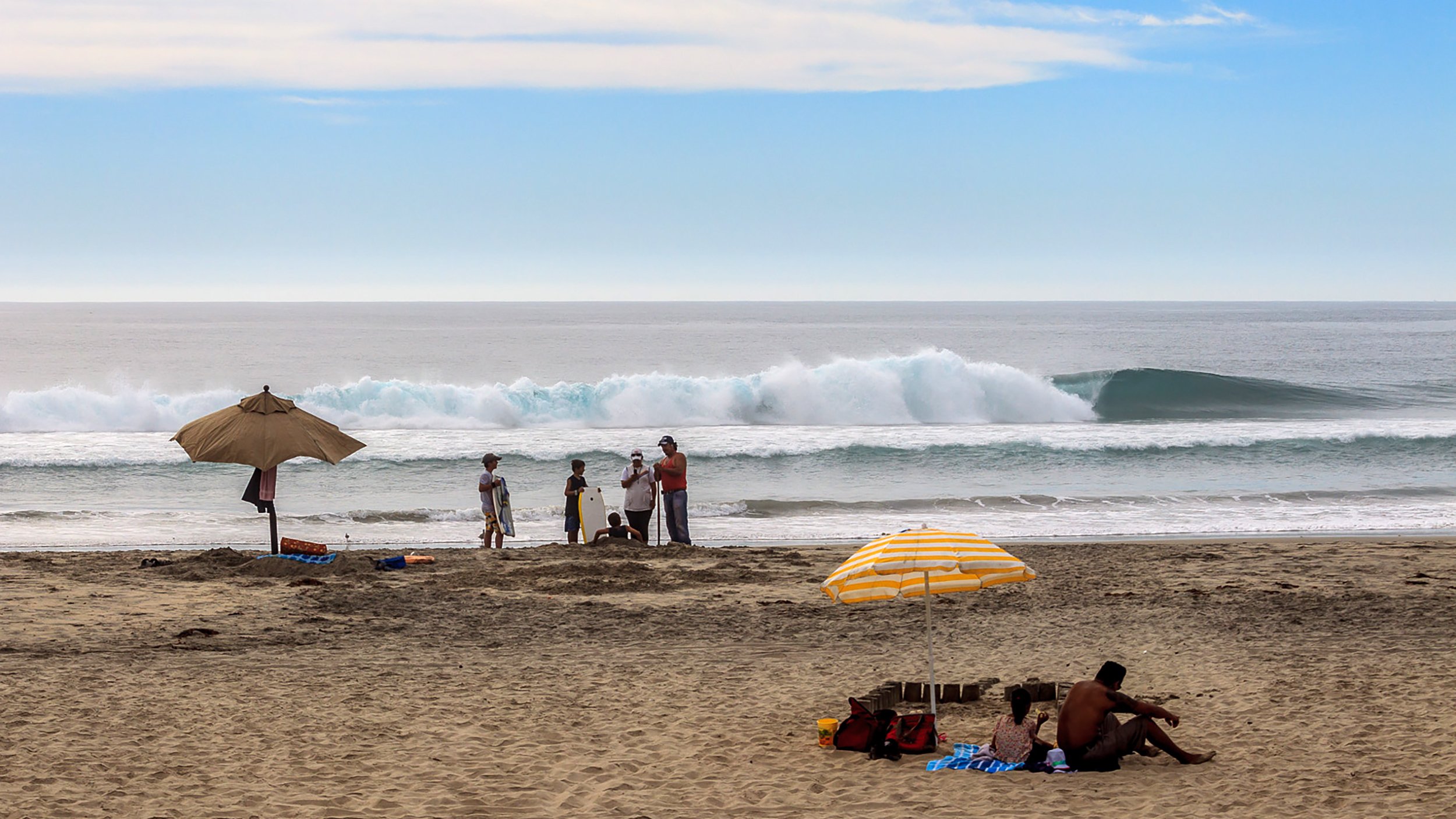
A quick and powerful escape from San Diego, Baja Malibu ranks up there as one of Baja's premier waves and can be world-class when everything aligns. This long stretch of beach loves a solid, long-period NW swell or combination of NW and S/SW swell. And thanks to the offshore bathymetry, those long winter lines get broken up and funnel in as juicy mega-peaks. Additionally, when offshore wind blows, Baja Malibu can turn into an anomaly of apexes compared to nearby Baja breaks. However, just as easily, onshore winds can shred the surf to uselessness.
Rosarito
Once upon a time Rosarito Beach was the under twenty-one coed's preferred south of the border mecca. Weekends were wild and holidays were ferocious. There were also plenty of-age American tourists and local Mexicans that came to get in on the action. A town characterized by complementary tequila shots doled out by roving bartenders blaring whistles and dance clubs that rivaled even Kuta Beach's best, Rosarito was all boom, twenty-four hours a day, for generations of Northern Baja partygoers. Then the drug cartel wars came in 2007, and the whistles went quiet, the dance floors cold, and, low, Rosarito's seemingly indelible fiesta went bust. Today -- as the cartel violence begins to recede from the region -- tourism is slowly beginning to return to Rosarito, yet whether this Dodge City of the drink will ever return to the madcap heights it once reached is questionable. For now, all is comparatively docile.Luckily for surfers, the waves have never stopped pouring into Rosarito. But truth be told, Rosarito was never much of a surfing hotspot, considering Northern Baja's many other high-grade options. In the shadows of the towering, once-humming hotels is a ribbon of beach that is flat and faces directly west, making it one big close out as any swell -- North, South and anything in-between -- breaches the overhead mark. However, these beachbreaks do well on windswells and can do really well on combo swells (like northwest and southwest). There are a couple of places where rivers spill out into the surf, often creating good, if fleeting, sandbars, though pollution can become a factor. The pier in front of Rosarito Beach Hotel can also create decent sandbars.So if you find yourself in need of a quick surf after a night throwing back tequila shots of questionable quality in a grotesquely large and desperately empty dance club, you'll probably be able to find something worth surfing in town. Head just out of town however, and you'll be wanting a clear head for the many pumping point- and beach-breaks nearby.

La Fonda
A rare left-hander in an area with lots of rights, La Fonda is a river mouth/point a short drive south of Rosarito. One of Baja Norte's better known and more heavily trafficked spots, La Fonda is popular with the ex-pat crowd and easily accessed from San Diego, which keeps the lineup relatively busy. The beach break adjacent to the left point provides hollow, rippable peaks to help relieve crowd pressure and provide a bit of variety.

Todos Santos
It's funny, but most of the time, surf spot names tend to exaggerate the intensity of the wave -- think frank 1960s/70s labels like "widowmaker", "dead man's" or "shark pits". And yet here we have Killers, a vile oceanic beast that lives beside the northwest corner of Northern Baja's barren, wind-battered Todos Santos island, that threatens, at every moment it is awake, to do just what its namesake suggests. (It should be noted that many of Baja's surf breaks are thoughtfully named.)Killers was the West Coast's first legitimate big wave, discovered by the Windansea guys back in the '60s. And despite taking a permanent backseat to Maverick's after the Northern California grotesquely giant A-frame stormed on the scene, Killers remains a rite of passage for any aspiring big wave charger this side of Oahu.As with most big waves, a number of factors have to intersect to make Killers wake up: the reef points directly into the maw of northwest swells, and is flanked by a serious underwater canyon that focuses long period swell energy down the point -- often doubling the size of whatever swell's out there. It's a powerful and shifty deepwater wave, complete with weird boils and bumps in the face, but if you make the drop on your chattering 10'2" and are able to bottom turn around the first section and actually like it, you may be ready for the bigger leagues. Better make sure you like getting up at 2am, though, if you're coming from SoCal, 'cause Killers blows out early most days.

The nicer you are to the locals the more you’ll learn about where the good surf is, the more great seafood you’ll eat and all the wonderful stories you’ll have to tell.

When to Score & Seasonal Surf Data
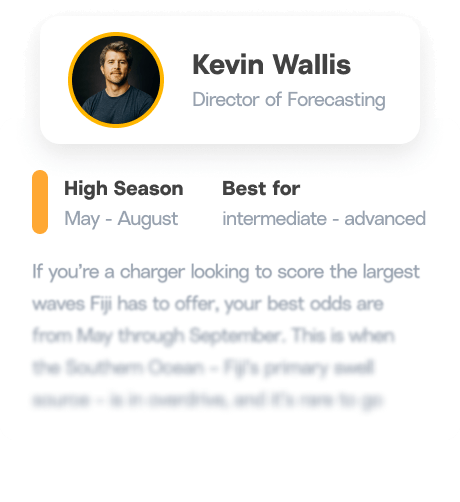
Know exactly when to score — powered by our expert historical forecast data.
Decades of spot-specific swell info — combined with forecaster insights — show your best chance to score, found only on Surfline.
Time to score

Forecaster reports
Seasonal Surf Data

North Baja According To...
Serge
Dedina
The executive director of the non-profit environmental organization Wildcoast, Dedina breaks down Baja’s rules of the road, where to eat and why your onda is critical to scoring south of the border.
What makes Baja California a special destination for surfers?
It’s wild, rugged with exceptionally warm, hospitable people. It has all the elements of what a surf trip should be. In every corner of the peninsula you can find the true essence of Baja, even in Cabo, even in Tijuana, even offshore of Ensenada where you have Todos Santos. It’s pretty remarkable. It’s really interesting. You can go superficial and go where everyone else goes, or you can go triple layer deep and get some real nuggets that no one else gets. All the secrets unfold when you want them to unfold. You have to work for it. If you want to go to Scorpion Bay with 300 of the same people you surf with at Malibu you can. Or if you want to take a little break and go somewhere else you can go find waves.
What kind of waves can visiting surfers expect?
There is every kind of wave you could want in Baja. From the big waves of Todos to the feathered peaks and sandbars of Northern Baja and some of the world’s best pointbreaks down south.
What’s the vibe?
Baja is Baja. You need to be on your toes. You need to be ready and prepared. And you need to be nice to people. Driving faster doesn’t get you there faster. I think what’s really important to remember is the nicer you are to the locals the more you’ll learn about where the good surf is, the more great seafood you’ll eat and all the wonderful stories you’ll have to tell.
What should surfers bring?
Bring you passport. That’s number one. Don’t forget the passport. In terms of surfboards, you’re going to want something with plenty of volume like a longboard or a fish, there are spots for high-performance shortboards and spots you’ll need a big-wave board. You should be ready for slower point waves, hollow beach breaks and even bigger stuff if that’s what you’re chasing. Make sure your spare tires are good. Make sure you have a first aid kit. You should have a shovel in your car as well. And spend the extra time figuring out where the hospitals are. Have a cell phone that works in Mexico, that’s really important now. Always have plenty of water, not just a few little water bottles, but be prepared with some jerry cans or something. And finally, get a paper map.
When is the best time to score?
Obviously fall into winter is a magic time down there, but now with what seems to be the extending fall season into January, it’s opened up the window a lot. The last couple of Januarys down there have been magic. For me, it’s always that winter swell season. But those Southern Hemis have their spots. And then there’s hurricane surf on the East Cape in Southern Baja. As you take chances and decide to surf somewhere that people aren’t Instagramming, you can get some really good waves. Even in spring you can find places that are really good.
What else is there to do when you’re not surfing?
You’ve got some of the world’s best fishing grounds, so make sure you get a fishing permit. There’s great paddling, diving and hiking. But I think really a lot of folks go down there and get into the fishing when they’re not surfing. You have to contact the Mexican consulate either in San Diego or Los Angeles, and while a lot of guys don’t get permits, you really don’t want to be caught without one. And when it comes to lobsters and shellfish, the rights to those fishing grounds are all owned by somebody, so you if take a lobster or some shellfish you’re taking food from somebody’s family. It’s about karma. And the reality is, if you’re nice to people and you share, the chances are somebody’s going to walk up to your tent or car with a bucket full of lobster or shellfish.
What’s your favorite local cuisine?
Let’s make it clear right now, the restaurants in Tijuana, Ensenada and Valle De Guadalupe are arguably some of the best restaurants in North America. Famous chef/surfer Javier Plascencia and others have done an amazing job of taking the food of fish camps and ranches into restaurants. But if you’re on the road, every region has it’s thing. So, if you’re at Punta Abreojos you’re going to get fresh sashimi. If you’re at San Ignacio Lagoon north of Scorpion Bay you’re going to get scallop ceviche. That’s the thing, if you’re hanging out with the locals, you’re going to be eating the food you pay $100 for at a restaurant in Valle De Guadalupe—and you’re going to eat it in a dusty fish camp. It’s pretty remarkable how amazing the food is if you’re really dialed into fish camp and fishing culture. And there’s really great food down in San Jose Del Cabo and the whole Cape region, there’s been this really amazing renaissance of authentic Baja food culture there. But among them all, all the longtime Baja surfers and Baja 1,000 guys know, that you have to go to El Trailero in Ensenada. That’s the full-on Northern Baja taco spot.
Where can people learn to surf? Any surf schools you’d recommend?
Ensenada is a good place to start. And, of course, Cabo. Say what you will about Cabo, but the ocean is still magical there and you’re always going to get waves. It’s always worth a trip. The water’s warm and it’s gorgeous. And regardless of all the overdevelopment, the surf spots are open. It’s the Honolulu of Baja, right? And you can still get waves.
What are some things people should be aware of when it comes to local culture and customs?
There’s a traditional wave that you give when you’re driving down the road. It’s the same kind of casual, friendly wave that you people in places like Wyoming or Montana or West Texas use. When you’re on dirt roads, wave to everybody. Say hi to everybody. Because that might be the guy comes to help you out. Just go out of your way to be extra friendly. It’s amazing what a big smile and “buenos dias” can do. When you think about it, friendship and social connection are lifelines. Nobody has any money, so they survive by being friends with people and helping each other. Surfers that plug into that, that “onda" vibe, which is kind of like karma, they’re the ones that score. Whether that’s food, friendship, experiences or surf, in Baja you carry your own onda with you.
Any other local tips?
The reality is, there’s a security issue in Baja, just like there is anywhere in the world. But the big one is don’t drive at night. Just be extra cautious. It’s really important to be aware of your surroundings. But I’ll say it again, just don’t drive at night. It’s going to reduce your risk of problems a lot. Don’t flash your money. Don’t go get drunk at places with sketchy people. There’s no benefit to that.
Travel Essentials
Culture & customs
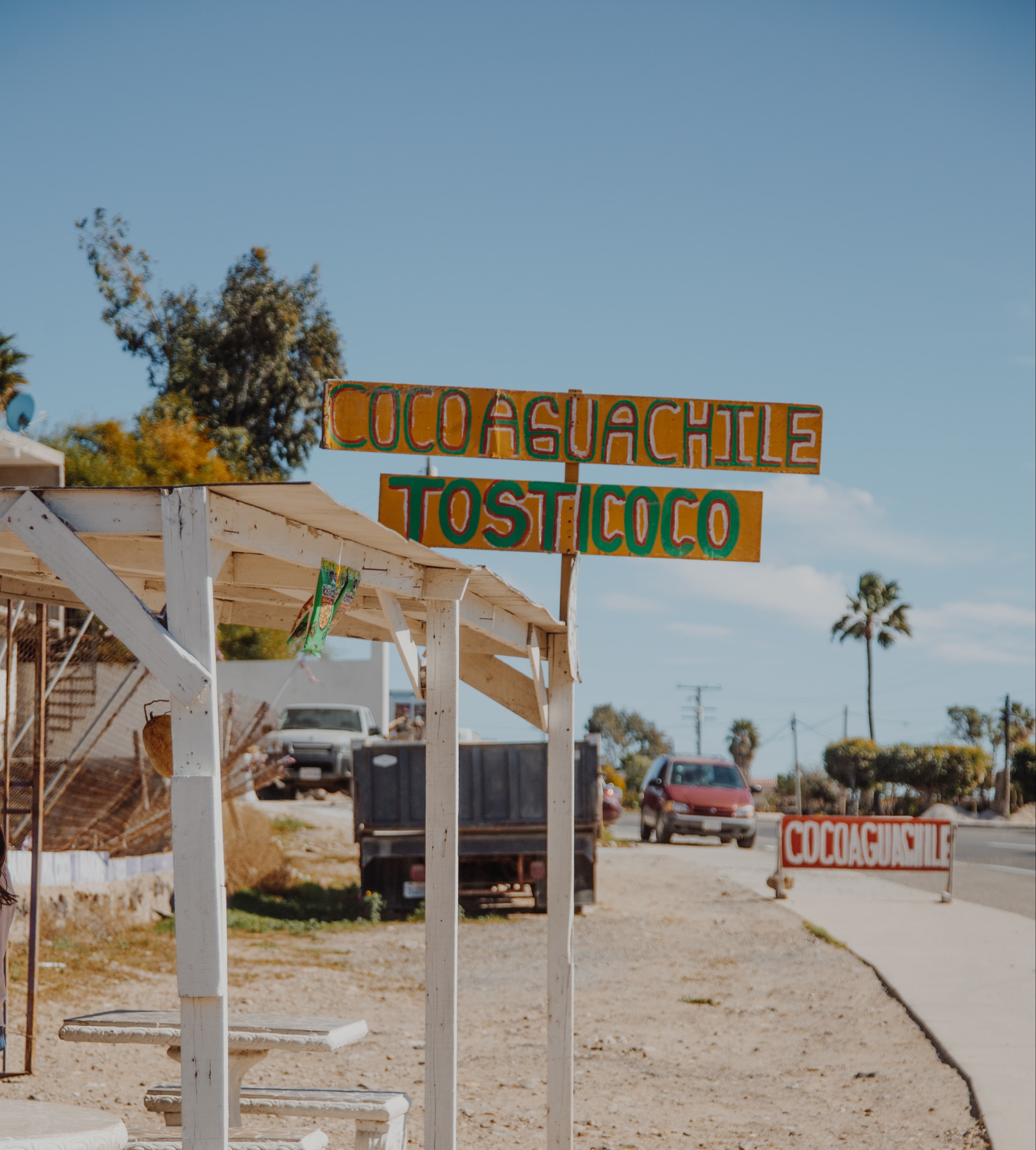
For many foreigners, the conversation about Northern Baja begins and ends in Tijuana. The border town has long been popular amongst Americans and other visitors for partying, carousing, catching a bullfight, and many other indulgences. However, if you keep driving south, the atmosphere changes dramatically. It gets quieter, less buildings, more desert, less people, more wildlife – and the locals reflect that change in scenery. Stop by a taco stand, and you’ll be greeted with classic Mexican hospitality. Perhaps an abuelita will cook and serve you, and it will be damn good and dirt cheap. Regardless, there’s always the potential for crime and violence while traveling in Mexico, and that doesn’t change once you get outside the major cities. It’s important to always be smart, respect the locals and the land.
Local scene
From empty beaches with the only locals being that flock of vultures circling overhead to popular hotspots with packs of Californians hopping over the border whenever the right swell hits — Baja has many moods. Most associate crossing the border with adventure, indulgence and freedom; but no matter where you are — from touristy Tijuana to an unnamed beach — it’s important to travel smart, stay cognizant, and be respectful.
What to bring
Unless you’re flying into Cabo and staying there, or going to a surf camp somewhere up north, chances are you’re going to be traveling through Baja by vehicle — be it a rental or your own — so make sure it’s an appropriate one: road ready and street legal. And if you plan to go searching for uncrowded waves, bring the proper gear: water, food, maps, medical kit, spare tires, GPS, satellite phone, etc. Surfers find themselves in trouble all the time here. And a little Spanish goes a long way.
Also: Our amazing partners over at FCS have curated a collection of fine products for your next surf trip. Check it here.
How to get there
Fly into Tijuana, or simply drive across the border. From there, head south. Download a map on your phone, upgrade your cell service to use internationally, or bring a WIFI hotspot. Be sure your vehicle is operating properly with good tires and a good spare, carry emergency supplies, some basic tools, etc. Never let your gas tank drop below half full in case there is no gas at the next stop ahead. Again, always plan for the worst situations and you’ll be OK. Remember: Not all those who wander are lost.
Downtime
Fishing, whale watching, bullfights, souvenir shopping… But most importantly, staying safe.
Quick Tips
Travel Time
LAX: 45 minutes (to Tijuana by plane), ~3 hrs by car
JFK: 5.5 hrs
Heathrow: 11.5 hrs
SYD: 30 hrs
Connectivity
Limited. Most surf camps or hotels will have WiFi, but it’s best to talk to your cellular provider before going, if you want to upgrade your service across the border. A portable WiFi hotspot isn’t a bad idea either.
Currency
Mexican Peso. At the time of writing, $1 USD = 20.32 MXN
Avg. cost of...
Cup of coffee: $1.50
Lunch: $7.00
Beer: $2.00
Hotel room: $75.00
Visa Requirements
If you're flying in, you'll receive your (free) tourist visa at the airport. If you're driving in, you'll need to get a tourist card (aka an FMM card) at the border if you plan to venture outside of the border zone south of Ensenada.
Drinking water quality
Bottled only. Seriously.
Hazards
Petty theft, the occasional straight-up robbery, getting ripped off, getting lost, car troubles, scorpions in your shoes, foodborne illnesses.
Cash, card, crypto
It’s always best to have cash (pesos) for tacos, bottled water, beer, etc. Be sure to hit an ATM in TJ or Rosarito before heading too far off-the-grid. But, if you find yourself at a hotel or a legit restaurant, you can likely get away with using a card.


Have feedback on this zone? Let us know [email protected]
Questions about booking with Surfline Travel? Check out our FAQs