West Bali
The west side of the Bukit Peninsula is the island’s main drag. Oozing convenience with all its restaurants, bars, stores and shops, the Bukit also hosts all the marquee waves — mostly long, hollow lefts thundering over shallow coral reefs and peeling along the curved coastline.
The Waves

Uluwatu
Uluwatu is actually a series of breaks on the southwest tip of the Bukit Peninsula: The Racetrack, The Peak, Temples, Outside Corner and The Bombie. With all of these breaks to choose from, Uluwatu is an ultra-consistent spot. Depending on the tide and swell size, any of these breaks will usually be firing at one point during the day. Generally, due to the access through the cave and the strong currents, the best possible conditions for larger swells are very low tides. Smaller and medium swells work well on all tides. During smaller swells, look for barrels and peaky surf on the higher tides at The Peak. On lower tides, The Racetrack can provide an ultra-fast reef grinder with a big barrel at the end. Those who choose to cut back often miss the end section, hence the name, The Racetrack. When surfing The Racetrack it is important to known the tides. On a middle tide, most advanced surfers will be able to negotiate the end section barrel with success. Once the tide drops, and especially on the lower tides of the month, The Racetrack end section is a twisting, multi-section barrel, a very dangerous place for experts and professionals only. When the largest swells of the year hit Bali, Uluwatu transforms into a true big-wave surfing venue - The Peak, Racetrack and Temples are all under whitewater, and Uluwatu's outer reefs, The Bombie and Outside Corner, come alive. These breaks will handle any size, and it's not uncommon to see perfect 15-foot surf here.

Impossibles
From up on the cliff or over in the Bingin warungs, sets rolling through Impossibles have the appearance of being some of the best waves on Earth. This is usually a deception - 90% of the time Impossibles is a sectioning, frustrating, impossible wave. However, when everything comes together, Impossibles can be flawless, and lucky surfers will experience epic, 400-meter, ultra-fast perfection.Impossibles is a difficult wave to predict. There does not seem to be any set rule for which swell directions, tides, swell periods or swell sizes will work best. Due to length of the reef and its relatively consistent angle to the coast, there is a very small degree window for the swell to peel off perfectly rather than in big chunks of sections. There are two main takeoff points at Impossibles: the top section and the bottom section. Generally the top section works better when it is smaller, and the bottom section will transform with a huge swell and a low tide. All in all, Impossibles can be a good option for surfers who are not quite ready for the heaviness of Uluwatu or Padang Padang. However, on the big days, Impossibles picks up a lot of swell, and surfers should take care to known how to get in with or without a board before they enter the water.

Padang Padang
When it's on, Padang Padang is a beast, truly "The Balinese Pipeline." On the biggest days of the year, huge swells march down the reef from Uluwatu, forming some of the biggest and heaviest barrels anywhere in Indonesia when they hit the Padang reef. Though Padang Padang breaks relatively frequently during the season, classic Padang is rare. For it all to come together, a strong, long-period SW swell, mid tides, and light offshores are required. Even with all of the elements in place, sometimes Padang Padang can pinch, or mutate halfway through the barrel. Not good when you consider that a wipeout in these conditions is very serious and means almost certain injury, broken boards, or both. When Padang Padang is classic, surfers can expect deep, dry, heavy, big tubes. When surfing Padang Padang it is important to understand the tides. During the lower tides of the month, Padang Padang can become absurdly dangerous as the end section breaks below sea level and directly in front of exposed, jagged reef. Even professional surfers find Padang's twisting barrel a challenge to negotiate, and most wipeouts mean a trip to a very unforgiving reef.

Balangan
Balangan is the last of the major lefthand reefbreaks on the Bukit. On its day, it is an epic big-wave spot with shifting peaks giving way to 300-meter smokers. On smaller days, Balangan offers a few different peaks, and is best on a mid to low tide when they can connect and form a long, racy wall. Tends to be less crowded than other surfing beaches on the Bukit.

Canggu
Canggu is a strip of black-sand beach and reefbreaks that is known for having something for everyone. There are a few soft rolling waves that are ideal for beginners, some rippable peaks for high performance surfing, and when it's big, there are some gnarly beachfront barrels for expert surfers. Canggu is more south-facing than Kuta Beach and will usually be bigger, and is often the spot when the swell is small, and many of Bali's hottest surfers from Kuta will make the morning trip to Canggu. Because it faces further south, Canggu is also more affected by the tradewinds and is best in the early mornings. After 9am, it is frequently sideshore and not the perfect glass of a few hours earlier.

Balian
While not the ultra-perfect green barrels that most surfers come to Bali for, Balian is still a swell magnet, and a place that will have decent surf when everywhere else is flat. The tradewinds blow sideshore here, and the rainy season westerlies blow onshore. Balian is a place for early-morning sessions with the potential for a late-afternoon glass-off. The wave at Balian is a rivermouth beach and rock break that offers up very rippable, shifting, A-frame peaks. Usually the lefts are better than the rights, and both can show an inside barrel section when it all comes together. Balian is not a place to go when there is a big swell running. It will be impossible to paddle out and the currents will become dangerous. If a big swell is running, most surfers will continue west to Medewi.

Kuta Beach
Kuta Beach is an ultra-consistent, quality beachbreak that is ideal for learners. Kuta Beach is actually a long strip of different sandbar breaks that runs from Kuta Reef all the way down to Seminyak's Blue Ocean beach. This stretch of white-sand peaks is best at high tide when the faster sections are more makeable and offer high-performance surfers the chance to link several maneuvers on each wave. Places like Halfways in front of Jalan Padma are the training grounds for some of Bali's hottest surfers.

Bingin
Bingin is all about perfect barrels. This wave at the end of the Impossibles reef loves a four-foot swell and a mid-low tide. When it's on, every wave of every set will have a clean, open, perfect barrel. If you want to get a barrel, this is the place where it's almost guaranteed. However, you will not be the only one in the water seeking this experience. A small takeoff spot, a community of visiting surfers, and red-hot locals that known every twist of the reef can make it difficult to actually catch one of these perfect barrels. Another aspect of Bingin that visiting surfers should be aware of is the end section, Stop Signs. No other piece of reef in Indonesia has collected more skin from surfers than this clump of raised coral. It's important for surfers to understand that Bingin is not a long wave. Drop in, get barreled, pull out. Going for that extra turn will usually leave the unsuspecting surfer high and dry with an afternoon trip to the local clinic for stitches.

Nyang Nyang
Though not a fantastic wave by Indonesian standards, Nyang Nyang is probably the most beautiful surf spot on the island and can provide for a nice alternative from the usual warung experience. The view from the top of the cliff is spectacular and the beach below is inviting. However, there are 600 steps between the top of the cliff and that beach. 600 steep steps down, and up. This is a great place for a workout, but not the place to run down for a quick surf.There are actually a few waves at Nyang Nyang. The place people surf the most is to the right of the beach at the entrance to a channel. This place is best with a high tide and small swell, and when it all comes together, the wave can be a short but fun, punchy, righthander.On larger swells, and lower tides, another righthander forms up to the north of the beach and can be seen clearly from the top of the cliff. This wave is usually much bigger than it looks, and a shifting peak means that only half of the waves are makeable. Even so, it's an impressive place to surf for the scenery alone. There are rarely other surfers in the water here, and there can be strong currents. Nyang Nyang faces due south and the power of the Indian Ocean is undiluted. Give this place some respect.

Kuta Reef
Kuta Reef is the original left hand reef break of Bali. Before surfers started venturing out to the Bukit, this was the place where surfers met the challenges of the big swells of the dry season. Kuta Reef is way out to sea and picks up quite a bit more swell than other nearby spots like airport lefts or rights or the beachbreaks. On bigger days, Kuta Reef offers up classic long walled, bowling, rippable surf, similar to some of its cousins out in the Bukit. Kuta Reef is a long paddle for anyone and it's best to take a boat out there. Another thing about Kuta reef is that it can be wind affected and is usually best when surfed early mornings or late afternoons. As Kuta is close by, crowds can become an issue at Kuta Reef and some days it can seem like it's just more of a hassle than it's worth.

Dreamland
It's easy to see how Dreamland got its name. So many surfers from all over the world dream of coming to Bali only to arrive here and realize that the waves they were envisioning themselves surfing such as Uluwatu, Padang Padang, Bingin, etc. are super heavy and the reef is sharp as heck. For these surfers, the relatively mellow beachbreaks and rolling reef down the road from Bingin is definitely a Dreamland. These days, Dreamland has become a small town on the beach. There're plenty of cafes, beach umbrellas, surfboard rentals, local surfers, and tourists from all over the world.During a small to mid-sized swells, Dreamland will break as a disorganized, rolling, outer beachbreak from mid to low tide. This is perfect for beginner to intermediate surfers, and it is common to see a crowd of longboarders and bodyboarders out there. On lower tides, there is a reform section on the inside of this beachbreak that can be fun for shortboarding, bodyboarding or bodysurfing. To the right of this beachbreak there are a series of rocks and clumps of reef that break in a semi-organized peak of lefts and rights. On smaller days these waves are nothing special, however, Dreamland is a swell magnet, and if there is a big swell running, and a low tide, the outer reefs at Dreamland can transform into some good, barreling A-frames.To get to Dreamland: Coming from Kuta, go to the Bypass road and head towards Nusa Dua. A few kilometers down the road you will arrive at a turn off with a sign for Uluwatu. Follow this road through the twists, and up the hill to the top of the Bukit Peninsula. Continue on this road through the four-way intersection until you reach a huge development project. Pecatu Indah. You will see two amazing statues on your right. Follow this road to the bottom and look for the signs for Dreamland.

To have the best trip to Bali just enjoy the experience. If you give waves, you’ll get waves.

When to Score & Seasonal Surf Data
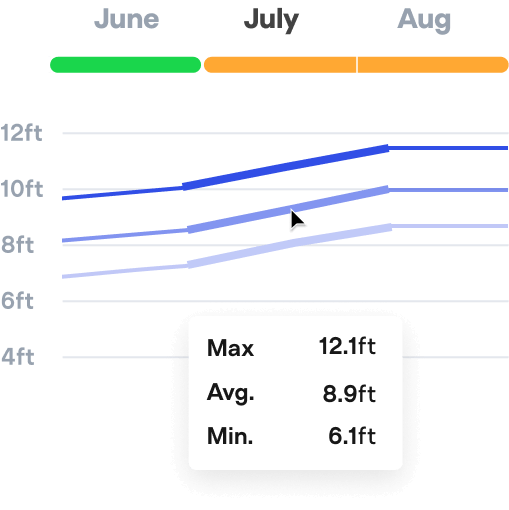
Know exactly when to score — powered by our expert historical forecast data.
Decades of spot-specific swell info — combined with forecaster insights — show your best chance to score, found only on Surfline.
Time to score

Forecaster reports

Seasonal Surf Data

West Bali According To...
Rizal
Tanjung
Indonesia’s original pro surfer shares a lifetime of knowledge about his local waters.
What makes Bali a special destination for surfers?
Bali is a very special place for surfers. We are here on a peninsula, which means you can almost always find some waves to ride. If the wind is onshore where you are, you can easily drive to the other side of the peninsula and it will be offshore. You surf the east coast when the wind is strong, even during the dry season, and if it switches you just head over to the west coast. There are always plenty of options, and if you’re tuned in, you can figure out where and when to go surf.
What kind of waves can visiting surfers expect?
Anything from shallow, hollow barrels to long walls to surf schools for beginners. Bali has everything. From the end of April until the end of October is the dry season, and we get all those winter storms off of Australia. You see something hitting Perth and three days later it’s going to hit Bali, so people come here for strike missions. Also, Bali is a good jumping-off point to get to places like Deserts.
What’s the vibe?
The vibe around the island is usually very mellow, but in the water, some places get very crowded and competitive. Other places off the beaten path are much more cruisey. There are very talented local surfers here, and this is one of the biggest surf tourist destinations in the world, so you’re going to get a lot of different experiences depending on who you are and what kind of surf trip you’re after. I think Bali is a very good option for families because there’s something for every ability. So, if you’re a dad, you can surf with your kids, but still, go and get barreled at other spots. It’s ideal.
What should surfers bring?
Lots of sunscreens and something to clean up reef cuts. Those are two things every surfer in Bali has to deal with. A surf shirt is a good idea, and vitamins and supplements to keep you healthy and properly fueled up. Whether it’s dehydration or the food not agreeing with you, keeping your nutrition up is really important. As for surfboards, it depends on where you’re going to be surfing, but a trusty shortboard and a good step-up are a really good place to start — that will get you into a lot of surf around here. Remember, the tide swings in Bali can be dramatic, which means heavy currents, so having enough foam under you to paddle is something to consider.
What else is there to do when you’re not surfing?
The culture of Bali is incredible, and it’s worth spending some time checking out all the beauty. There are the dancers, the rice paddies, waterfalls, mountain vibes, temples… If you’re going to come to Bali, you should experience it all. Take the time to see it, you’ll be stoked you did.
What’s your favorite local cuisine?
Bali is kind of like New York City in that it’s a melting pot and you have these amazing restaurants that fuse all kinds of styles of food. People from all over the world move here, so if you can think of it, we probably have it. I really like the local Indonesian food, but there are some good Western restaurants, as well.
Where can people learn to surf?
There are some great surf schools and places to learn to surf in Bali. Basically, if you do your research and stick with a larger, reputable operation, you’re good. There are great instructors here that know how to teach people to surf.
What are some things people should be aware of when it comes to local culture and customs?
This is a simple one, but always use your right hand to shake hands. People use their left hand to, you know, wipe themselves, so it’s very disrespectful to shake hands with the left. As far as surfing, follow the usual surf rules and respect the people that live there. There are a lot of travelers in Bali, and to have the best trip, just enjoy the experience and follow the rules. Give waves and you’ll get waves.
Travel Essentials

Where to Stay
One place Surfline recommends is Anantara Uluwatu Bali Resort, perched high on the cliffs of Bali’s southern coast, it puts you right in the heart of Indo surf paradise. Minutes from the heavy barrels of Padang Padang and Uluwatu and looking straight down at Impossibles from your room — not a bad way to wake up. Whether you're here to score the swell of the season or just recharge between sessions, this luxury pad is the ultimate surf basecamp. Think ocean-view suites with jacuzzis on the balcony, private villas with plunge pools, and penthouses that blend modern comfort with that classic Balinese vibe.
Culture & Customs
The Republic of Indonesia is the world’s largest Islamic country with an almost 90% Muslim population; however, the Balinese people are predominantly Hindu, hence Bali’s nickname, “Island of the Gods.” The primary language of the country is Bahasa Indonesia, but people in many areas have their own distinct dialects, and over 400 languages are spoken throughout the islands. Indonesia is rich in natural resources and oil, timber, agriculture, mining, and manufacturing are major industries; however, much of the population lives at or below the poverty level. Indonesia is a republic ruled by an elected president and a parliament.
How To Get There
From Bali’s Ngurah Rai International Airport – located on the inner stem of the Bukit Peninsula – you’ll simply follow the coast west via a few options: taxi or bus (or both), rental car, or simply strapping your gear to a scooter. Use caution on the latter, though. Although two wheels are quite popular in Bali, the traffic can be hectic, if not deadly, in the more populated zones.
What To Bring
Your most high-performance surfboard or your most reliable step-up; first aid for reef cuts; plenty of sunscreen; bug spray, especially during the rainy season (November-March); and all your other tropical surf trip essentials. Also, earplugs aren’t a bad idea if you’re staying near any one of the all-night clubs and planning to surf the next morning.
Also: Our amazing partners over at FCS have curated a collection of fine products for your next surf trip. Check it here.
Downtime
The Bukit in general and Kuta, in particular, are famous for their party scene. Outside of that, there are plenty of things to do and sights to see: from the ancient Pura Luhur Temple overlooking Uluwatu to the Mandala Suci Wenara Wana (or Sacred Monkey Forest) a short drive inland. There’s also the Jimbaran Fish Market, golf courses, spas, scooter tours, fishing and diving excursions, bungee jumping… It’s nearly impossible to get bored here.
Local Scene
The Bukit is the nucleus for Bali’s surf scene, so naturally, all the major spots draw thick crowds of locals and visitors alike when they’re on. But the Bukit’s also the hub for other non-surfer tourists, with a range of restaurants and accommodations for every budget and a raucous party scene known worldwide.
Quick Tips
Travel Time
LAX: 18 hrs
JFK: 22 hrs
Heathrow: 17 hrs
SYD: 7-10 hrs
Connectivity
Decent WiFi everywhere, except for the more rural areas.
Currency
Indonesian Rupiah. At the time of writing, $1 USD = 14,459 IDR.
Avg. cost of...
Cup of coffee: $2.50
Lunch: $10.00
Beer: $4.00
Hotel room: $160.00
Visa Requirements
Get it at the airport for $40.00.
Drinking water quality
Heard of Bali Belly? Not fun.
Bottled only.
Hazards
Stay away from the monkeys, seriously.
Cash, card, crypto
Best to have cash, especially in more rural areas. ATMs are available for Rupiah withdrawal in most urban centers.
Explore Other Zones


Have feedback on this zone? Let us know [email protected]
Questions about booking with Surfline Travel? Check out our FAQs