Orange County
Orange County’s 42-mile coastline offers some of the best, most consistent and varied surf in the state. Miles of consistent — and occasionally quite good — beachbreak from Huntington to Newport. Quirky reefs and beautiful beaches in Laguna. Longboard heaven in Dana Point. And then more beachbreak through San Clemente, till you hit the county’s crown jewels — Trestles and San Onofre.
The Waves

Seal Beach
Seal Beach Pier takes what is big and walled up at Huntington Pier and grooms it into nice, snappy little peaks. The most consistent spot to surf is on the north side of the pier, where you get all kinds of surfers ranging from the clueless to the talented. North Side of the Pier is also a great place to learn how to surf with good surf school instruction and small, gentle waves on most days. South side only works on winter swells from the WNW -- the bigger the better -- and is a hot spot for bodyboarding and skimboarding with steep bowly shorebreak.On a large WNW swell North Side becomes a very demanding wave with steep "pier bowls" that are reflected off the Anaheim Jetty to the south and sweep through the pier. South Side begins to imitate Hawaii with powerful thick bowls that break countless boards each day it pumps.At the north end of the beach is Ray Bay at the mouth of the San Gabriel River, where you can sometimes find long fun rights on big south swells -- but may actually be best on huge west swells. If the sandbars in the San Gabriel river are currently good, they offer steep hollow sections beginning at the end of the jetty -- especially on bigger swells and lower tides. However, most of the time the River is best for a longboard and beginners. Warm water from the Edison Plant inland keeps the water temps in the higher than the surrounding areas, which also attracts thousands of stingrays so stay off the bottom or do the shuffle.Seal Beach is in a wind tunnel due to its location below the Palos Verdes Peninsula, and the place is a favorite for kite boarders on windy days. Seal Beach may also be one of the cleanest spots around when the wind is strong out of the northwest due to the south facing coastline and protection from the jetties.

Huntington Beach
Huntington Beach is the alleged Surf City: a land of palm trees, riots, reform madness, body art, heat sheets, pink stucco, and a surfing Walk of Fame. Huntington, like many of Hollywood's sagging heroes of yesteryear, has undergone some major cosmetic surgery over the past few years. The Pier alone has been reconstructed some half dozen times. Mom-and-pop liquor stores and surf shops have transformed into block-sized palaces equipped with movie theaters, health food and top-rate surf goods. Like it or not, the days of Huntington as a mellow little surf town are over. Despite all the surrounding changes, the waves remain unchanged. Diehards swear by the break, claiming it's the ultimate surfer's wave, and others just laugh and say that contest organizers can have it every day of the year, for all they care. Whatever the case, there are still classic California days to be had at the Pier. Just wake up early one morning and if it's a peaky swell with Santa Ana winds, you'll side with the diehards. The division between the two main breaks is a logical one.


The Wedge
The Wedge: a mutant of a big wedging left that reflects south swell energy off the Newport Harbor jetty. On a big south swell the Wedge can produce waves well over 20-foot faces very close to shore, with hollow grinding boels right on the sand. During the summer all flotation devices (surfboards, bodyboards, skimboards, etc.) are banned at Wedge between 10am-5pm so the old school bodysurfers can have at it. The Wedge is a classic spectator arena and one of the best entertainment venues in the world when it's on.
Salt Creek
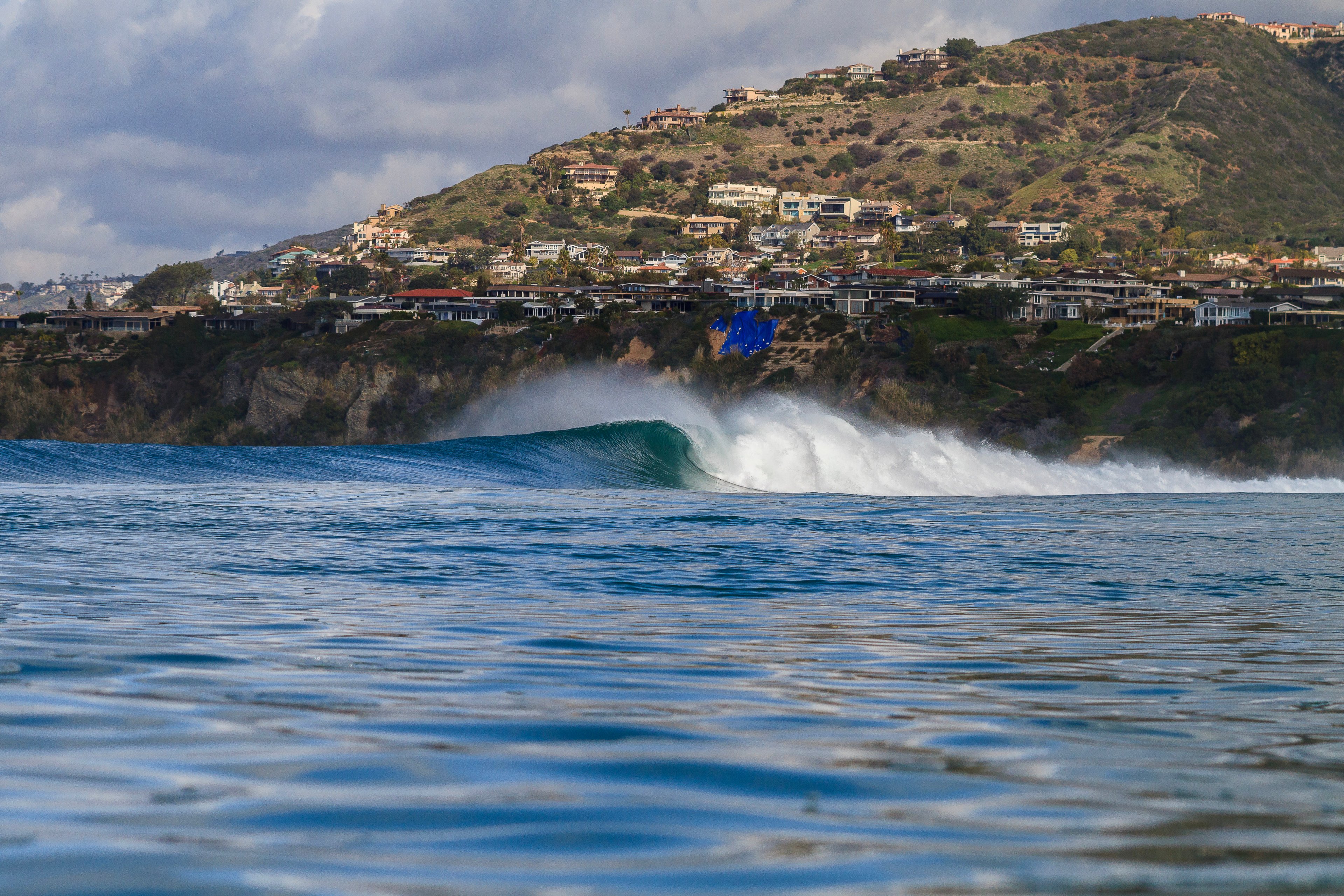
Nestled in a beautiful cove at the northern end of Dana Point lies Salt Creek, a watery playground of long pointbreak-style lefts, wedgy A-frames, relentless shorebreak and sand-gurgling rights. You name the type of wave, and Creek probably has it. At the most southern end of the beach is the Point. If the sand is good, it's a goofy-footer's skatepark as far as left pointbreaks go: extremely rippable, extremely crowded and has an extremely small takeoff zone. The Point takes any south swell and on the largest days, it can reel across the bay producing 50-yard rides. Watch out for rocks on the inside at low tide. Middles is usually where the rest of the pack ends up catching waves. Peaks crumble year-round from the outside and suck dry on the inside, creating ankle-snapping aerial sections on the right tide. During summer after 10 a.m., Middles is black balled and Point is the only spot left open to surfers. If you're one of those surfers who enjoys pulling into deep closeout tubes and getting sand in all of your orifices, head north of Middles to the section in front of the golf course called Gravels. On west swells, Gravels is a showcase right-hand barrel. It peels in about two feet of water on any tide, and sometimes throws squarely into shore.

Doheny
Killer Dana is dead, and Doheny is its low-budget tombstone. Thirty years ago, a jetty and harbor transformed summer's Orange County answer to Rincon (500-yard right-hand walls on big south swells) to a polluted children's wave. Faithful old-timers still paddle out to catch its meager remnants, but they're left pining for the past.If you aren't aware of what existed before it, Doheny is an ideal beginner's wave. Swells slip past the swell-choking jetty, break softly over a bed of cobblestones and form into slow shoulders. A few hundred yards north, by the San Juan Creek, there's a sandbar and reef that break better on stronger swells. During the winter of 1993 and the El Nino winter of 1998, perfect sandbars formed near the rivermouth and produced hollow freight-train rights. If you can withstand the sky-high fecal counts, it's these types of bars that'll quench the thirst for days past. Those days are all too rare, though, so Doheny, if anything, will serve as great place to introduce your child to his/her first wave.For many years Doheny has been ranked at or near the top of lists of the most polluted beaches in southern California. Orange County Health Care Agency's 2003 Ocean and Bay Water Quality Report indicates that Doheny had the most "Beach Mile Days" of water quality standards violations of any beach in Orange County. Heal the Bay's 2003-2004 Beach Report Card listed Doheny as their #1 Beach Bummer, consistently earning "F" grades for water quality, especially during wet weather. Although a sewage treatment plant exists alongside San Juan Creek just up from the beach, this plant has had a good operating record in recent years. Doheny's high bacteria counts are likely due to a combination of factors, including urban runoff from the 134 square mile San Juan Creek watershed, pollution from boats in Dana Point Harbor, large flocks of seagulls that poop in the creek water near the creek mouth, and poor water circulation at Doheny which has been a problem ever since Dana Point Harbor was constructed.If you live or work in Dana Point, Laguna Hills, Laguna Niguel, Mission Viejo, Rancho Santa Margarita or San Juan Capistrano, you could be part of the problem or part of the solution. Surfrider Foundation reminds you not to litter, to pick up after your dog, not to over-irrigate your lawn, don't hose off your sidewalk or driveway, and take your car to a car wash rather than washing it at home. And stay out of the water at Doheny and at other surf spots near creek mouths and major storm drains for up to 72 hours after a rain.

T Street
T Street is known for one thing -- consistency. The entire West Coast from Jordan River to Cabo could be flat, and T Street, the central hub for San Clemente's finest, would manage to cough up a wave or two that would make a surfer happy. There are a lot of things that help T Street break: sandbars, reefs, rocks and odd seaweed gardens all contribute to the wave's quirky behavior. It'll transform from San O' to mini-Backdoor in the time it takes to do a bottom turn. Although the T Street fanatics have many different names for every hole in the reef, the break is typically divided into three spots: the Reef, Cropley's and Beach House.On a strong S swell, lefts hit the outside reef, break slowly, then peel over the inside rock shelf, bowling in a fast, down-the-line section. On winter swells, you get the opposite: long, workable rights off the reef ending in a collapsing shorebreak. Cropley's is strictly a winter break. Named after the owner of a tasty hamburger stand that no longer exists, Cropley's provides fast, zippy righthand peaks just north of the snack bar. Some swear it's T Street's best wave when it's on -- which isn't very often. It takes just the right swell direction from the NW. South of the overpass, there's a sandbar that old locals call the Beach House, named after a candy shack that once stood there. On medium-size swells, you can catch some wedgy lefts and rights that are often less crowded and more geared toward shortboards and bodyboards. T Street is a longtime haven for bodyboarders and San Clemente's top pros.

Uppers
While the surf media limelight tends to focus itself a quarter-mile south, Upper Trestles steadily grinds out quality cobblestone righthanders that are often equally as impressive as Lowers. And if the river is flowing, Uppers can even offer a short, punchy left into the mouth. But the focus is always on the rights, especially since Uppers draws in a bit more west and northwest energy than its sister to the south.North of the rivermouth is the outer takeoff zone, which peaks up the biggest but usually sections off once the wave reaches the corner of the cobblestone point. From the corner, which offers the most bowly, rippable waves, rights run through the quasi-cove created by sediment buildup from the San Mateo Creek. And if you pick off the right wave, it's not impossible to go the entire distance -- burning your legs through upwards of 150 yards. It should be noted that the sections are directly affected by sand and cobblestone placement. Big swells and the extreme rains that cause the rivermouth to burst are the main movers and shakers of Uppers' wave quality.
Lowers
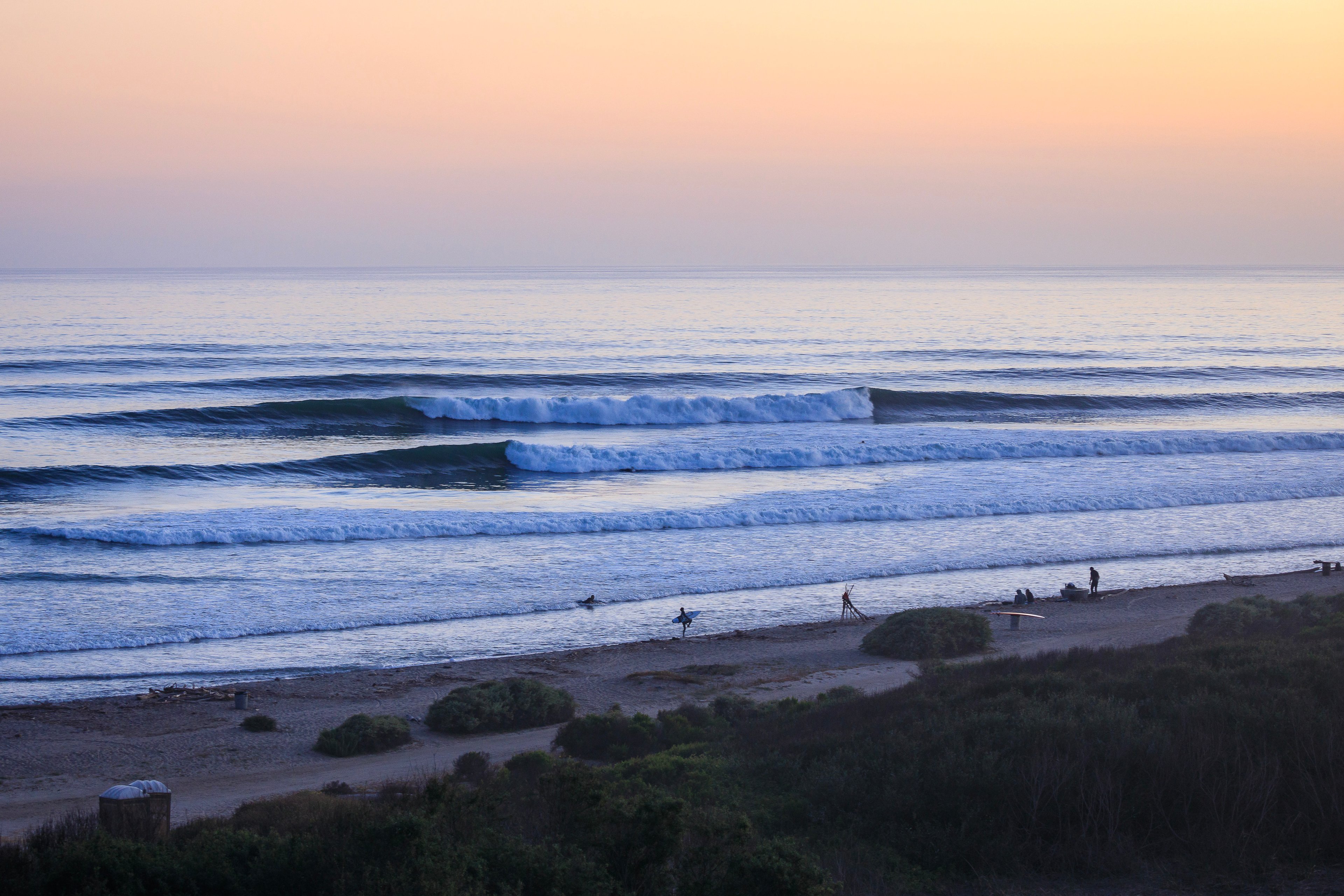
The apex of everything surf in Southern California - peak action, A-framing rights and lefts and even a peek-a-boo view from the freeway. Lowers IS Ground Zero for high-octane surfing. Offering forgivably rippable walls going either way, Lower Trestles only closes out on the rarest of swells.If there's a sniff of south swell in the water, Lowers will welcome it with open arms. But if there's a puff of south wind, Lowers will shut down quicker than 5:00pm on Wall Street.Don't expect to score Lowers uncrowded either (even on full moon nights). Watch any set roll through and you'll see two (or more) surfers taking off in either direction, which often makes things frustrating for even the biggest name pro surfers. But if you manage to wrangle one to yourself, hold on because you're in for one of the best rides Southern California can offer.

San Onofre
San Onofre State Beach is the Waikiki of the California Coastline -- a beginner's paradise of gentle breaking waves, long sandy beaches and an absence of ego. It was at this break, more than 50 years ago, that legendary surfers such as Lorrin "Whitey" Harrison, Don Okey and Bob Simmons planed forward using balsa/redwood surfboards. Today, it is one of the last few beaches that epitomizes the California surfing lifestyle. On any given summer weekend, you can find a whole tribe of surfers playing volleyball, talking story and swilling beer under grassy huts or sitting hunched over their longboards, waiting for the next lazy peak to float their way. Locals divide San Onofre into three main breaks: the Point, Old Man's and Dogpatch. All work best on a strong south swell. If you must bring a shortboard to San O', which, by the way, is the equivalent of bringing a longboard to Teahupoo, the Point would be your best bet. The Point is located directly in front of the northernmost parking spot. On a head-high southwest swell, there are some relatively fast lefts (fast in San Onofre terms) and even a section or two to hit if you get lucky. Rights are far more predominant and can be milked with a funboard or longboard. During winter, the Point often shuts down. With a 15-minute paddle to the south of Point, you'll find yourself in the surfing world's equivalent to the movie Cocoon. Here at Old Man's, geezers rule and grommets learn. The wave rolls off a padded reef some 200- to 400-yards offshore and is mushier than a bowl of cream of wheat. A longboard that'd float Shaquille O'Neal is the weapon of choice and surfing etiquette does not apply. In fact, it's not uncommon to see 10 people on a wave during the summer, nor is it rare to see lawn chairs and dogs brought on board. Just south of Old Man's is Dogpatch. It's ideal for beginners if the swell is up and they cannot make the paddle out to Old Man's. On a high tide, Dogpatch breaks in slow motion and is second to Doheny as Orange County's easiest wave to learn on. All of San Onofre's waves are typically indecisive about breaking. If you understand this point, you'll be well ahead of the game. Waves here like to crest, back off, crest, back off, crest, back off and then finally break. Trying to find your "one last wave" of the day can be a good trial in anger management. But if you find yourself ready to spout, you've missed the point. San O' is there to remind us that in this crowded world, there's still a spot where we can all ride together with smiles on our faces.

It’s like the epicenter of surf culture. The waves are fun -- maybe not world-class every day, but super consistent.

When to Score & Seasonal Surf Data
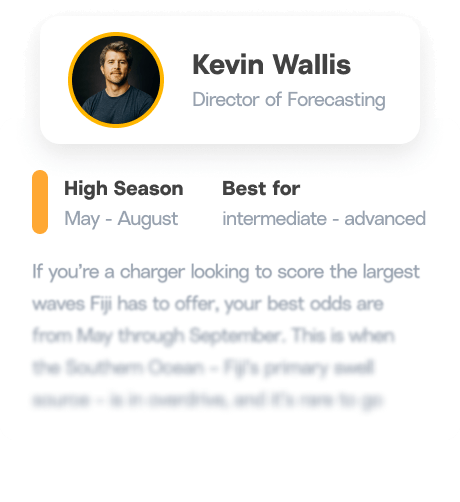
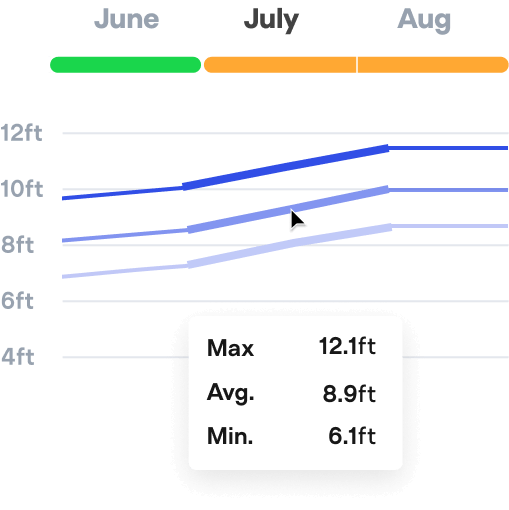
Know exactly when to score — powered by our expert historical forecast data.
Decades of spot-specific swell info — combined with forecaster insights — show your best chance to score, found only on Surfline.
Time to score

Forecaster reports
Seasonal Surf Data

Orange County According to...
Nate
Yeomans
Former CTer, longtime OC road warrior shares his insight on surfing's SoCal home.
What makes Orange County a special destination for surfers?
Well, first off, it’s pretty easy to get to -- three major airports in Southern California. Unless you’re coming from somewhere like South Africa, it's not a tough trip. And as a surf destination, you’ve got Trestles, which is a no-brainer. I also think it’s the diversity. It’s the epicenter of surf culture. The waves are fun -- maybe not world-class every day, but super consistent. It’s also a great stopover if you're visiting other parts of California. Between Disneyland, Huntington Beach, Trestles, you probably know someone who lives here. It’s a snapshot of both surf and SoCal culture.
What kind of waves can visiting surfers expect to find?
On a good day? Amazing. But even on an average day, people from the East Coast come out here and are blown away—there are waves all the time. From Seal Beach down to Trestles, you’ve got variety—quality changes, but on the right day, it’s world-class.
How would you describe the vibe?
It’s definitely more gentrified than it was in the '90s. There’s way less localism now. Generally pretty welcoming. Super easy and access -- you can literally park right on the beach at Huntington or Newport. Trestles is a bit of a walk, but still accessible.
The vibe changes seasonally. Fall and winter are my favorite -- less crowded, better weather. Summer gets hectic with tourists and beachgoers. But overall, it’s safe, easy to navigate, and has plenty of amenities -- parking, lifeguards, food, hotels, all that.
What should a visiting surfer bring?
In summer? Bring a sweatshirt. It can get surprisingly cold with those north winds. I'd also bring a fullsuit -- spring and early summer especially. Even in June, it can be foggy, misty, and 60 degrees. As for boards, a fish or a hybrid shortboard works pretty much anywhere, depends on your skill level. For me, something fun and user-friendly is best. We do get big swells, but more often it’s smaller, grovely surf. A fish will keep you having fun.
Best time to score?
October, hands down. Offshore winds, warm days, cooler mornings. You get combo swells -- south and northwest -- and the crowds thin out. Conditions are super clean. Light winds in the afternoon, offshore in the morning -- classic fall setup.
What else is there to do besides surf?
Well, if you're single, there are a million good-looking people. Beyond that -- baseball, hockey, Disneyland, Knott’s Berry Farm, farmer’s markets, great beaches. Just driving PCH from Seal Beach to San Clemente, you’ll see how different each town is.
What’s your favorite local food?
My favorite spot in San Clemente is Vine. Great little place, my buddy owns it. Super good food with a hometown vibe. I also like Sonny’s -- family-owned Italian spot that’s been around forever. And tacos, basically everywhere -- you can't go wrong. (Editor's note: we had some local forecasters chime in here, too: Sancho's Tacos in HB, Session's West Coast Deli (multiple locations), Bear Flag (multiple locations), and La Sirena in Laguna Beach.)
Where would someone go to learn how to surf?
Huntington’s probably the easiest -- super accessible, lots of surf schools. Doheny’s great too, though it’s got some rocks. Most towns have surf camps, mostly seasonal but some run year-round. Huntington probably has the most options.
What should visitors know about the local culture?
Everyone’s busy. It’s just fast-paced. That applies to driving, how people interact -- it’s not unfriendly, just hurried. Beach towns are more laid back, but overall, people are juggling a lot. Be aware of that energy when you’re here.
Travel Essentials
Culture and Customs
Modern surf culture has been shaped in no small part by Orange County. Duke Kahanamoku frequented Corona Del Mar in the '20s; San O became popular in the '30s and '40s while Hobie Alter and Grubby Clark created the first polyurethane boards in the '50s, along with one of the first surf shops in the country. And for the last 70+ years, this slice of SoCal has been the epicenter of the global surf industry, technology and media, as well as a hotbed of professional surfing and pro surfers. Today, OC blends heritage with progression and diversity -- whether you’re trimming at Doheny or punting at Lowers, you’re surfing in the shadow of history.
Local Scene
With somewhere in the neighborhood of 30-40 different surf spots, all of which require slightly different conditions, Orange County is home to a very wide swath of frothy surfers and surf craft. There's grizzled locals who’ve surfed San O every day since the ’60s, TikTok-era groms filming every session (or using cam rewinds!), posting to social media before school -- and just about everything in between. Known breaks/peaks can be quite competitive, open beachbreaks less so, but there aren't really any spots that could be considered "localized", and most keen surfers are accustomed to navigating the existing etiquette of whatever lineup they've chosen. Generally a very pleasant place to go surfing.
What to bring
Board-wise, bring whatever you'd ride at home in fun, shoulder-high to just overhead surf. Nine-foot singlefin, 5'10" thruster, 5'6" fish, bodyboard, hand plane, skimboard, you name it -- but you can leave that Mav's gun at home. Rubber-wise, depending on where you're coming from, a solid 3/2mm will get you through winter and spring (which can be the coldest time of year); summer and fall can warm up to almost trunkable, but it always pays to have some kind of springsuit or short-arm fullsuit 'cause water temps can vary pretty wildly day to day. And while it rarely gets cold cold, it's always worth having at least one hoodie in your bag, especially for once the sun goes down. (Worth keeping in mind: this is the epicenter of the surf industry, with surf shops everywhere, so anything you need -- and a bunch of stuff you don't -- will be very readily available for purchase.)
How to get there
Pretty simple from most anywhere: Ideally, fly into John Wayne airport in Santa Ana or Long Beach. International flights will likely have you land at LAX, which is doable but less than ideal due to horrifying yet inevitable traffic. No matter where you fly in, you'll need to rent some kind of vehicle to get around here. (An international Driver's License is not necessary, but useful.)
Downtime
Many spots here blow out late morning, so you will likely have some afternoons free for exploring. And there's no shortage of extracurriculars. For theme park fans, there's Disneyland and Knott's Berry Farm. For sports fans, there's often some kind of big game happening, whether it be baseball (Angels) or hockey (Ducks). Shopping options include South Coast Plaza, Fashion Island and the Irvine Spectrum (all reasonably fancy) and the Lab Anti-Mall in Costa Mesa (reasonably hipster) -- as well as the iconic Huntington Surf and Sport and Jack's in HB and the the ultra-core Frog House in Newport Beach. Laguna Beach has galleries and fancy beachfront restaurants.
Quick Tips
Travel Time
JFK: 6 hours
Heathrow: 12 hours
Sydney: 14 hours
Connectivity
Everywhere.
Currency
USD.
Avg. cost of...
Coffee: $3.00
Lunch: $15.00
Beer: $8.00
Hotel room: $200
Visa Requirements
Yes. Depends where you're coming from. Check with your local consulate.
Drinking water quality
Clean.
Hazards
Traffic, parking tickets, water quality post-rain, stingrays in summer in North OC beachbreaks.
Cash, card, crypto
Credit cards are widely accepted, and access to ATMs is readily available.
Best first surf trips.


Have feedback on this zone? Let us know [email protected]
Questions about booking with Surfline Travel? Check out our FAQs