North Los Angeles
With dozens of corners and coves all along the PCH from Topanga to County Line that light up right points with enough swell — and some punchy beach break peaks around Zuma in between — even off the shores of the sprawling metropolis of Los Angeles, you can still find a hidden session with your friends, if you know where to look.
The Waves

County Line
Always bigger and colder than it looks, this is the first consistently surfed spot south of Point Mugu (it's actually just north of the Los Angeles County line). Once called Pete's Reef for the burger stand that once stood on the cliff, County Line can be a fun hot-dog wave, while the beachbreak can get nasty and hollow at high tide. It is probably the most visible surf spot on this stretch of highway, but the indistinct lineup can be hard to figure out, and that spreads the crowd around nicely.On the north end of the beach, there's a kelpy point/cobblestone right that consistently offers the best waves. It lines up best on W and SW swells with a medium tide, though the beachbreak gets plenty of traffic during the summertime souths. There's also a hollow, rock-riddled left at the far north end.


Malibu
Malibu: the name has become synonymous with surfing and is an old Chumash word meaning, "The surf sounds loudly." Although it doesn't roar like it once did, the 'Bu is still considered one of the best small rights in the world. Malibu has been crowded since photographer Leroy Grannis returned from World War II and found the place "mobbed" with 12 guys on the point. Since then, it's been the focal point of hot-dog surfing and Southern California beach culture, from Quigg and Kivlin to Tubesteak, Moondoggie and Gidget to Dora, Fain and Carson to Riddle and Pratt to Sarlo and Daley to Petruso, Stansfield and Perillo to longboarders like Josh Farberow and Kassia Meador. To say Malibu is crowded is like saying the Pacific Ocean has a lot of saltwater -- it's a given. With this in mind, the people in the lineup are almost as much fun to watch as the wave is to ride. They are a microcosm of L.A. itself: rebels, punks, cowboys, models, godlike masters, floundering kooks and huddled masses yearning to be free. There's also the largest collection of graceful fat guys you'll ever find. Malibu consists of three loosely defined take-offs on a cobblestone point, with the occasional sandbar on the inside. On large swells, the points can connect into a ride over a quarter-mile long. Generally thought of as a summer break, the 'Bu will also take west and even big northwest swells. The smaller inside break, First Point, is by far the most familiar and the best-shaped wave of the bunch -- a mechanical, mesmerizing wave to watch. Behind all the history and beneath the clutter of boards and bodies, there is still a gem of a wave that folds at the speed of a noseride. The next spot out, Second Point or Kiddie Bowl, is a much shorter -- though faster -- performance wave. It sometimes closes out with swell or tide changes, but is also a good escape from the crowd if you keep a sly eye out. If you get lucky, you can connect the section into First and spray all the longboarders. Third Point is the farthest out and serves up the fastest bowly wave in the area -- state-of-the-art speed surfing. Dominated by an aggro shortboard crew, it's a wonderful study in mob mentality: the predators, the prey, the shouting, the inevitable crack of boards slamming together and the onlookers' mischievous snickers. Most regulars, though, hold the opinion that all you need is one to make your day. The downside of all this perfection is the pollution. There are now approximately 12,000 residents in the lower Malibu creek area, most with septic tanks that leach into the lagoon, which, along with problems created by the Tapia Water Facility, has led to one of the worst pollution problems in the state. When the lagoon empties into the sea, either by rainfall or bulldozer, bacteria levels at Malibu go off the Richter. There have probably been a few winter pileups on PCH caused by surfers slamming on their brakes, stunned at the sight of Malibu's empty brown perfection. To a daredevil few, the E. coli warnings serve only as crowd control. Without a doubt, it's the most tempting cesspool you'll ever see.

Leo Carillo
An unmistakable righthander just a half-mile south of the county line, where PCH dips down near a scenic cove fringed with large rocks, on most days, the wave also known as Secos peaks up near the big rock outside, then reforms into a spunky inside section. The problem here is the confined takeoff area: it supports about six people. Leo Carrillo is best on a medium tide, with S or SW swells up to double-overhead. There are a series of rock reefs outside that will hold a big W or NW and push the takeoff zone north and outside of the rock, making it set up more like a point. On the biggest swells, there is another point farther north called Primo's.

Topanga
A visible long right point at the base of Topanga Canyon. Topanga can be a real workable wave with plenty of challenging sections, but it never matches the shape of its cousin, Malibu. Topanga will take any swell, but it's best on a big west. During the huge El Nino winter of 1982-'83, local Donnie Wilson picked off a ride from Topanga that connected all the way past Chart House -- a distance of more than 300 yards. Always crowded and on shore there's this mangy, hippie, drifter atmosphere. Don't accept any free brownies.

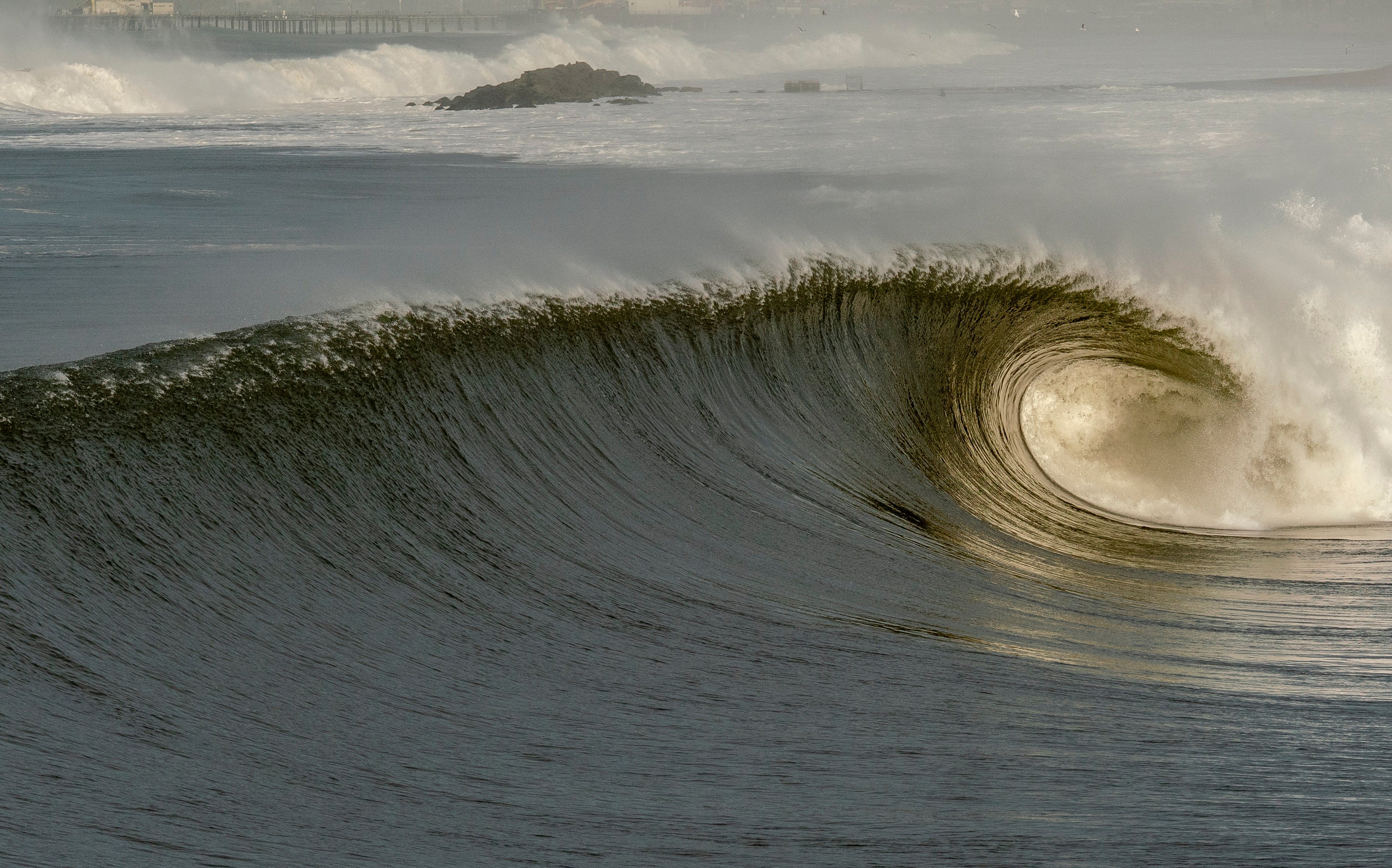

“It really is amazing to see a world-class wave like Malibu do its thing in the summer. But even more than a surf destination, LA is a full experience.”
When to Score & Seasonal Surf Data
Know exactly when to score — powered by our expert historical forecast data.
Decades of spot-specific swell info — combined with forecaster insights — show your best chance to score, found only on Surfline.
Time to score

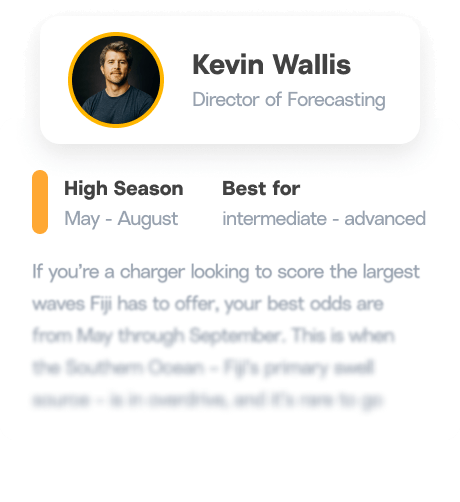
Forecaster reports
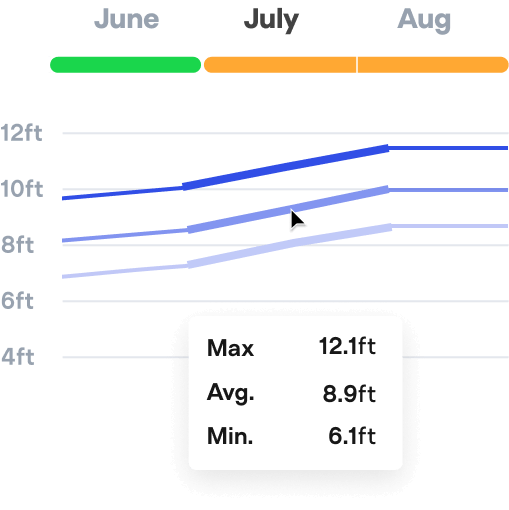
Seasonal Surf Data

North Los Angeles According to...
Kassia
Meador
Longtime Malibu stalwart on the City of Angels
What makes L.A. a special destination for surfers?
From the beach to the mountains and the cityscape in between, it’s just such a dynamic, expansive experience. First Point Malibu is an ideal, premier, world-class wave that we have and it really is amazing to see world-class waves do their thing. But heading further and further north up the PCH, there are so many different rock features, and you really feel like you’re far away. It’s so stunning and beautiful. There’s nothing like surfing some off-the-beaten-path wave up there and then head into Neptune’s Net, which is a groovy, iconic biker bar, for some clam chowder. It’s always an experience around here.
What kind of waves can visiting surfers expect?
Venice Beach and the Pier has a bunch of fun beachbreak peaks. Venice Breakwater gets good on the small south swells when the points aren’t really doing it, too. Of course there’s the points of Malibu, then beyond Zuma Beach, there’s a bunch of really, fun little pointbreak style waves like El Pescador, Matador, Nicholas Canyon, Leo Carrillo. There are so many fun, little, dynamic, cool spots.
How would you describe the vibe?
All in all, people in LA right now are just really grateful to be outside and grateful to be in nature with how tragic of a year we’ve had with the Palisades Fires. Some places are more hectic than others, like First Point Malibu, but once you go beyond the fray a little bit, up by Pescador and Matador, it’s super chill because they’re not surfed very much. You can go get a couple mellow waves around Venice, too.
What should surfers bring?
For wetsuits, anything in the 3/2 range. The closer it is to the Fall, bring a 3/2 for the early mornings or late afternoons, and then a long john and a jacket is a nice combo. When it comes to boards—longboards, mid-lengths, alternative crafts, just because a lot of the waves in this region specifically are longer, stretched-out pointbreaks, where it’s just nice to have a little more rail line to play with a little more volume. Of course, tons of people shortboard 3rd Point Malibu and Zuma.
When is the best time to score?
The best time to score is in the summer because these long-period, steep-angled southern-hemisphere swells are what really light up Malibu. Fall can be great though, too, because the wind can be a lot calmer compared to the Springtime when you can get some weird coastal eddies.
What else is there to do besides surf?
LA has got a zillion things to do, but if you have a chance, I’d say don’t miss out on one of Malibu’s best-kept secrets, and that’s the Adamson House. It’s an estate and you can learn about the history of Malibu, which is really interesting. It’s such a hidden gem and the reason that Malibu exists today in the way that it does and why there isn’t a railway through it. Driving down the PCH is great and there’s a lot to see.
What’s your favorite local food?
If you want an experience, going to Duke’s is awesome. It's right on the beach at Malibu and the actual Gidget still works there, so you can go hang with her and have a whole experience. I always jam over to Howdy’s. They have great burritos. John’s Garden is good for a juice, and then you have Sunlife for smoothies. If you’re in Northern Malibu, head over to Lily’s.
Where would someone go to learn how to surf?
You definitely can learn at First Point Malibu, but normally we would point people to Sunset, or Topanga or Santa Monica.
What should visitors know about the local culture?
People can drive insane on the PCH, so I would say that when you go cruise through the PCH, take it slow. Enjoy yourself. Don’t be in a hurry. Take in the sights. Take in the pace. Pick up after yourself, cruise, and enjoy yourself. Remember that you are normally where somebody lives, and when we’re in the ocean, mind all the animals that live there, too.
Travel Essentials
Culture and Customs
If California surfing has a spiritual birthplace, it’s Malibu. In the late 1940s and '50s, legends like Bob Simmons, Joe Quigg, Matt Kivlin, and Miki Dora shaped both the wave and the culture, turning First Point into a proving ground for style. The '60s saw surfers like Lance Carson, Kathy Kohner (the real "Gidget"), and Dewey Weber carry the scene into the mainstream. In the '70s and '80s, LA icons like Allen Sarlo brought power to the point (as he STILL does), while through the '90s into the Now, Josh Farberow, Kassia Meador, the Marshall Brothers, Jimmy Gamboa, Dane Peterson, and Soleil Errico perpetuate Malibu’s timeless aura. Indeed, whether you’re perched on the nose or racing from Third to Second Point, you’re riding through layers of living history out there.
Local Scene
Sure, most of the spots are right outside of America’s most populous city on the West Coast, but…the lineups aren’t necessarily the chaos you’d imagine. Yes, Malibu gets packed, but it’s manageable (all 3 points) and most longboarders stick to First and Second Points, while shorter boards stay up at Third. Regardless, there’s an interesting mix (wherever you surf in N. LA) of locals that live along the coast or up the canyons, with LA transplants, actors, athletes, and college kids shooting up from USC, UCLA or Pepperdine. Normally, there’s a balance, and localism isn’t too overt (unless you’re talking Little Dume zone).
What to bring
Board-wise, bring whatever you'd ride at home in fun, waist to head-high surf. Nine-foot singlefin, 8’0” mid-length, 5'10" thruster, 5'6" fish, bodyboard, kneeboard — almost never a big wave gun. Rubber-wise, a 4/3mm (w boots if you want) will get you through winter and spring, summer and fall can warm up to almost trunkable (knee-paddling a longboard), with 3/2s or shortarms in between. On land, having a light jacket in the summer is always smart if/when the afternoon marine layer rolls in, or a puffer jacket for the early morning dawn patrols.
How to get there
Pretty darn easy: Land in LAX, rent a car (Kayak, Booking.com, Orbit etc.), find the Pacific Coast Hwy (PCH) and start heading North.
Downtime
You’re technically in (or very close to) LA, so there’s absolutely no shortage of stimuli. Dodger’s Game? Lakers or Clippers? Kings for some NHL? You could always cruise Abbot Kinney Blvd back in Venice or get weird on the Venice Boardwalk. Of course, if you want to stay out of the city (don’t blame ya!) there’s a ton of great hikes and walks around Malibu Canyon. You can also just kick it down around First Point like the locals do and wait for the tide while you listen to the old dawgs tell tales about Dora. Or just venture North toward County Line, go camping at one of the state parks along the way, and grab some chowder with the bikers at Neptune’s Net right along the PCH.
Quick Tips
Travel Time
JFK: 6 hours
Heathrow: 12 hours
Sydney: 14 hours
Connectivity
Everywhere. (Though there are some dead spots up in the hills and along the far north coast.)
Currency
USD.
Avg. cost of...
Coffee: $5.00
Lunch: $25.00
Beer: $8.00
Hotel room: $250
Visa Requirements
Yes. Depends where you're coming from. Check with your local consulate.
Drinking water quality
Fine.
Hazards
Traffic, parking tickets, errant surfboards, water quality post-rain
Cash, card, crypto
Credit cards are widely accepted, and access to ATMs is readily available.
Best first surf trips.


Have feedback on this zone? Let us know [email protected]
Questions about booking with Surfline Travel? Check out our FAQs