About Nova Scotia Surf Travel
Another addition to the ever-growing list of global coldwater surf destinations (thanks, wetsuit technology), the Canadian Maritime Province of Nova Scotia (“New Scotland”) has at last revealed its potential in books and surf mags depicting snowy beaches and perfect, empty pointbreaks backdropped by rural countryside and dense forests. While those conditions are not entirely rare, they normally occur during winter, a time of bitter cold, when most surf tourists are heading south (or wherever it’s trunkable), happily leaving the fullsuit dry-docked for a spell. But each autumn there is an influx of American East Coasters flying to Halifax at the first hint of a good hurricane swell, for good reason: the southeast-facing Nova Scotian coast is one of the world’s most convoluted and complex, loaded with pointbreak after reefbreak after rivermouth after beachbreak, and the only semblance of crowds exists around Halifax/Lawrencetown. Though the surf is fickle and the wind sure likes to howl, it’s always offshore somewhere; solitude and good roads abound, so the plucky surf traveler need only a reliable car, a detailed map, a thick wetsuit, and a bit of prime timing to realize his or her Maritime Province dream.
Nova Scotia Surf Crowds:
Any rural, cold island is bound to have its share of local surfers these days, but on Nova Scotia, the modest surf population generally congregates around Lawrencetown and Cow Bay, since this area is the closest to the suburbs of Halifax. With so many good spots so close together, why go further afield?
Nova Scotia Surf Hazards:
A wild, rocky place, Nova Scotia is also frigid most of the year, so the biggest threat to your well being would be–you guessed it–the unknowns of a butt-cold wilderness. Home to some of the world’s most radical tide-swings, the currents here can be severe. Understandably, the aforementioned ‘surgical strikers’ coming up from the U.S. has rankled more than one hard-core Nova Scotia local, and localism is prevalent, so no matter where or when you go, showing respect is the name of the game.
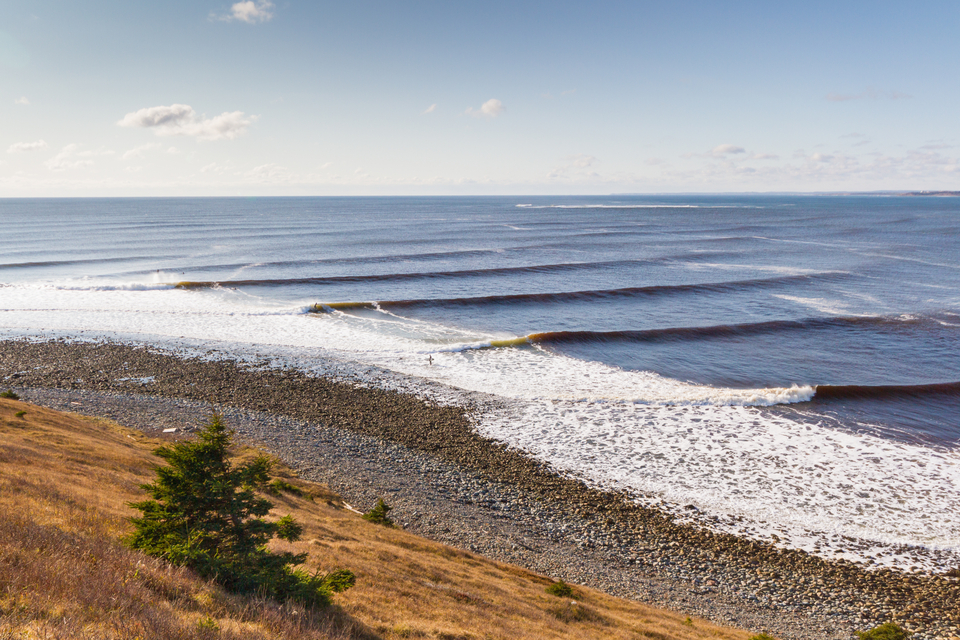
Lines to the horizon
Best Surf Seasons in Nova Scotia:
1) Fall
By far the best time of year for good swell, wind, and weather to combine themselves. This is hurricane season, also the time of year when the North Atlantic awakens for a bit of pre-winter action. The water is still sort of warm, and the countryside foliage erupts into a riot of reds and oranges, making for one pretty place. Throw in some clean southerly hurricane swell, and suddenly you’re in New Scotland heaven.
2) Summer
A nice, mild (by Nova Scotian standards) time of year; also the most crowded with tourists and thrill-seeking surfies, who generally won’t find much more than weakish windswell, best at the beachbreaks. Air and water temps are at their annual warmest, and you could luck in to an early-season (i.e. late summer) hurricane pulse.
3) Winter
So cold, it hurts. Nor’easters and North Atlantic low pressure systems pound the coastline with remarkable consistency, bringing gales and snow to outright bury the good surf for at least a few months–that is, unless you manage to slip in between storms, the best window for winter shredding. If you do go in winter, bring thick boards and a thicker wetsuit–floating hunks of ice and 30°F water isn’t compatible with your new boardshorts.
4) Spring
The dregs of winter linger, which means ice-cold water, some storminess, and a decent amount of swell. But like everywhere else in the northern hemisphere, the farther from winter and the closer to summer, the smaller and junkier the swell gets. But spring is the prettiest time of year in Nova Scotia if you like flowers and bees and things like that.
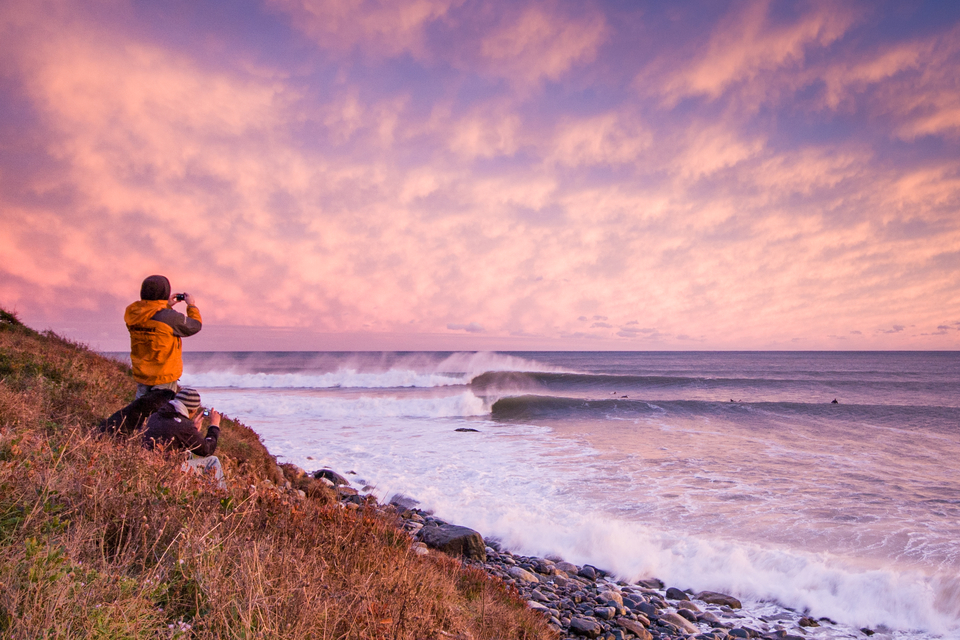
Purple hues and perfect waves
Directions to Best Surf in Nova Scotia:
Unless you’re game for a gnarly boat ride from Maine or Quebec, you’ll fly straight to Halifax, and if your flight lands early enough, you could be surfing within a couple of hours (or less).
Best Surf Reading for Nova Scotia:
Stormrider Guide: North America (Low Pressure Publications)
Lonely Planet: Canada’s Maritime Provinces